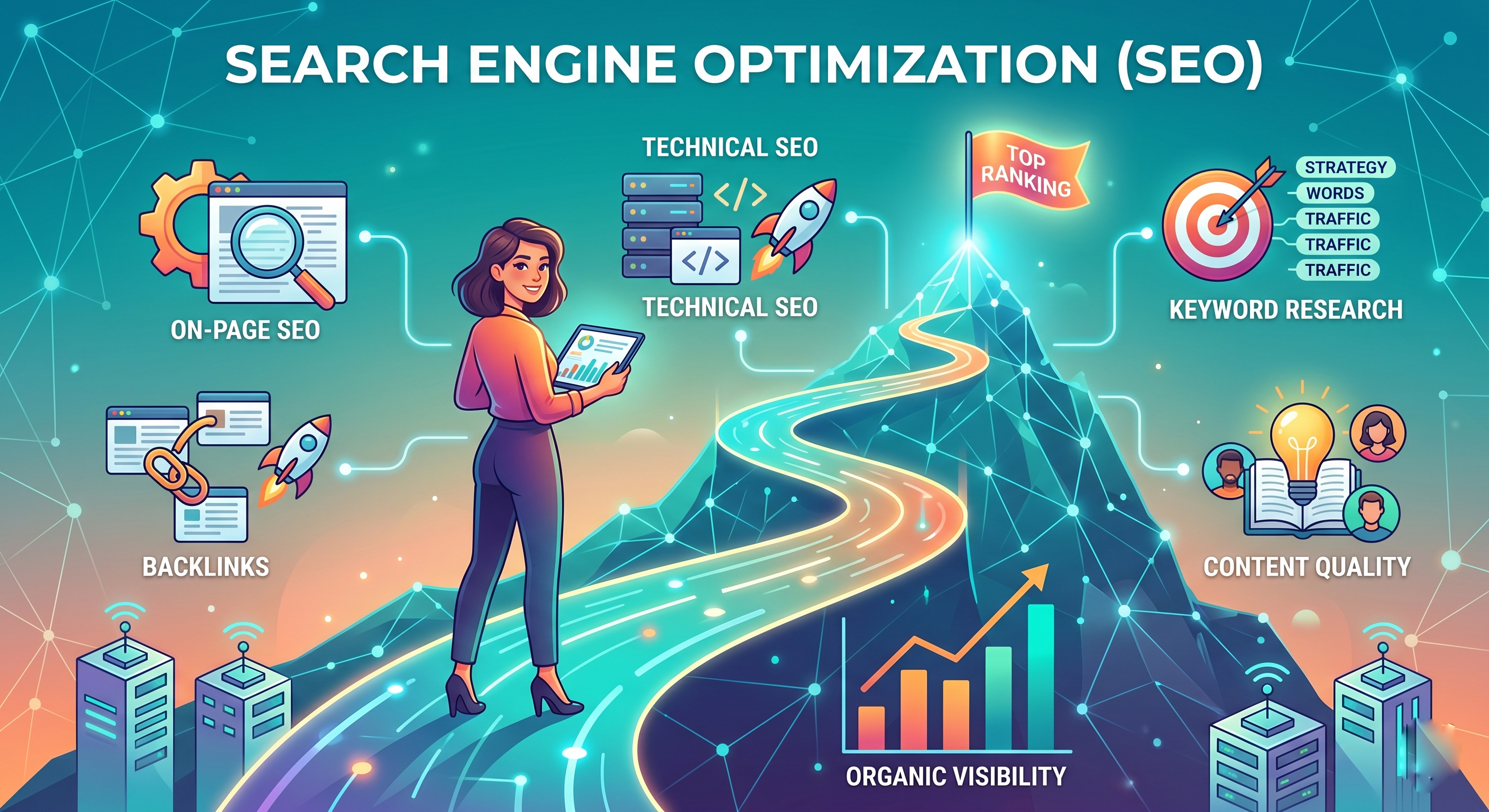
Types of Search Engine Optimization (SEO)
Search Engine Optimization (SEO) is the art and science of improving a website’s visibility on search engines like Google, Bing, and Yahoo without paying for advertisements. In 2025, SEO remains one of the most powerful digital marketing strategies, driving a significant share of online traffic and helping businesses, bloggers, and brands reach their target audiences organically. SEO is divided into several types, each focusing on a specific aspect of website optimization and search performance.
| Type of SEO | Description |
| On-Page SEO | Optimizing website elements like content, keywords, titles, meta tags, URLs, and internal links to improve rankings and user experience. |
| Off-Page SEO | Activities done outside the website such as backlinks, social media marketing, guest posting, and brand mentions to increase authority. |
| Technical SEO | Improving website structure and performance so search engines can easily crawl, index, and rank pages (speed, mobile, sitemap, HTTPS, etc.). |
| Local SEO | Optimizing for local searches to attract nearby customers using Google Business Profile, reviews, and local keywords. |
| E-commerce SEO | Optimizing online store pages like product pages, categories, images, and descriptions to increase sales and traffic. |
| Content SEO | Creating and optimizing high-quality content like blogs, articles, and guides to attract organic traffic and improve rankings. |
| Image SEO | Optimizing images using alt text, file names, compression, and proper format to improve search visibility and speed. |
| Video SEO | Optimizing video content for platforms like YouTube and Google using titles, tags, descriptions, thumbnails, and engagement signals. |
| Voice SEO | Optimizing content for voice searches using natural language, conversational keywords, and question-based queries. |
| International SEO | Targeting multiple countries and languages using hreflang tags, localized content, and geo-targeting strategies. |
1. On-Page SEO
On-Page SEO is the process of optimizing individual web pages on a website to improve their visibility and ranking in search engine results. It involves optimizing both the content and HTML elements of a page so that search engines can easily understand the topic and relevance of the content.
- In simple terms, On-Page SEO helps make your website more search-engine-friendly and user-friendly.
Why is On-Page SEO Needed?
On-Page SEO is important because it helps search engines understand your content and determine whether it is relevant to a user’s search query. Proper On-Page SEO can improve rankings, increase organic traffic, and enhance the overall user experience. it includes,
- Improves search engine rankings.
- Increases organic website traffic.
- Helps search engines understand page content.
- Enhances user experience and readability.
- Improves click-through rates (CTR).
- Supports keyword targeting and relevance.
- Increases website credibility and engagement.
Without effective On-Page SEO, even high-quality content may struggle to rank well in search results.
Key Elements of On-Page SEO
- Keyword Optimization:- Using relevant keywords naturally throughout the content, headings, title tags, and meta descriptions helps search engines understand the page topic.
- Title Tag:- The title tag is the clickable headline that appears in search engine results. It should be clear, descriptive, and include the primary keyword.
- Meta Description:- A meta description is a brief summary of the page content displayed in search results. A compelling description can improve click-through rates.
- Headings (H1, H2, H3, etc.):- Proper heading structure organizes content and makes it easier for both users and search engines to understand the page.
- High-Quality Content:- Content should be informative, relevant, original, and valuable to users. Quality content is one of the most important ranking factors.
- URL Structure:- URLs should be short, descriptive, and easy to read. Including relevant keywords can improve SEO performance.
- Internal Linking:- Linking to other relevant pages within the website helps users navigate and allows search engines to discover additional content.
- Image Optimization:- Images should be optimized using descriptive file names, alt text, and proper compression to improve accessibility and page speed.
- Mobile Friendliness:- Web pages should be responsive and function properly on smartphones and tablets, as mobile usability is a key ranking factor.
- Page Speed:- Fast-loading pages provide a better user experience and can positively impact search rankings.
- User Experience (UX):- A well-designed page with easy navigation, readable content, and clear calls-to-action helps keep visitors engaged.
- Schema Markup:- Structured data helps search engines better understand content and may improve the appearance of search results through rich snippets.
- Internal linking:- it is a process of linking one page of a website to another page within the same website. It helps search engines crawl pages easily, improves website structure, and enhances user experience.
2. Off-Page SEO
Off-Page SEO refers to the optimization of activities that take place outside of a website to improve its ranking in search engine results pages (SERPs). It focuses on increasing a website’s authority, trust, and popularity through external signals such as backlinks, social media presence, and online brand mentions.In simple terms, Off-Page SEO helps build your website’s reputation across the internet.
Why is Off-Page SEO Needed?
Off-Page SEO is important because search engines use external signals to measure how trustworthy and authoritative a website is. A website with strong Off-Page SEO signals is more likely to rank higher in search results.
- Improves website authority and trust.
- Increases search engine rankings.
- Builds brand awareness and online reputation.
- Drives referral traffic from other websites.
- Enhances credibility in your industry.
- Helps search engines evaluate popularity and relevance.
- Supports long-term SEO growth
Without strong Off-Page SEO, it becomes difficult for a website to compete in highly competitive search results.
Key Elements of Off-Page SEO
- Backlink Building:- Getting high-quality backlinks from other relevant and trusted websites helps improve domain authority and search rankings.
- Social Media Promotion:- Sharing content on social media platforms increases visibility, engagement, and traffic to your website.
- Guest Posting:- Publishing articles on other websites helps build backlinks and reach new audiences.
- Brand Mentions:- Mentions of your brand across blogs, forums, and websites help increase trust and authority, even without direct links.
- Influencer Marketing:- Collaborating with influencers helps promote your website or content to a wider and more engaged audience.
- Online Communities & Forums:- Participating in discussions on platforms like forums and Q&A sites helps build visibility and referral traffic.
- Local Listings & Citations:- Listing your business on directories improves local visibility and strengthens SEO signals.
Advantages and Disadvantages of Off-Page SEO
| Advantages | Disadvantages |
| Helps improve website authority and trust through quality backlinks. | Takes time and consistent effort to see results. |
| Improves search engine rankings for competitive keywords. | Hard to get backlinks from high-authority websites. |
| Brings referral traffic from other trusted websites. | Risk of getting low-quality or spam backlinks. |
| Increases brand awareness and online visibility. | You have no full control over external websites. |
| Builds strong online reputation through mentions and reviews. | Can become costly when using paid guest posts or influencer marketing. |
| Helps search engines discover and index your pages faster. | Wrong practices may lead to Google penalties. |
3. Technical SEO
Technical SEO is one of the most important types of SEO. It refers to optimizing the technical aspects of a website to improve its visibility and ranking in search engine results pages (SERPs). It focuses on improving how easily search engines can crawl, index, and understand a website.
In simple terms, Technical SEO ensures that your website works properly for both search engines and users by improving its structure, performance, and accessibility.
- Technical SEO acts as the foundation of a website’s overall SEO strategy. While content and backlinks help improve rankings, technical optimization ensures that search engines can access and evaluate the website efficiently. If a website has technical problems such as slow loading speed, broken links, poor mobile usability, or indexing issues, it may struggle to rank well even if it contains high-quality content.
- Technical SEO also focuses on creating a seamless user experience. Search engines like Google prioritize websites that are fast, secure, mobile-friendly, and easy to navigate. By improving these technical factors, website owners can enhance both search engine visibility and user satisfaction, leading to better engagement and higher conversion rates.
Why We Need Technical SEO?
Technical SEO is important because even high-quality content cannot rank well if a website has technical issues. Search engines need a properly structured and error-free website to crawl and index pages effectively.
- Improves search engine crawling and indexing.
- Enhances website performance and speed.
- Improves user experience and usability.
- Increases organic search rankings.
- Reduces technical errors and broken pages
- Makes the website mobile-friendly and secure and Helps search engines understand website structur.
Without having proper Technical SEO, a website may face indexing issues and lower visibility in search results.
Key Elements of Technical SEO
- Website Structure:- A well-organized website structure helps search engines and users easily navigate and understand content.
- Website Speed:- Fast-loading pages improve user experience and are a key ranking factor in search engines.
- Mobile Friendliness:- Websites must be responsive and work properly on all mobile devices.
- Crawling and Indexing:- Optimizing crawling and indexing ensures search engines can discover and store all important pages.
- XML Sitemap:- An XML sitemap helps search engines understand the structure of a website and find all pages easily.
- Robots.txt File:- This file tells search engines which pages should or should not be crawled.
- HTTPS Security:- A secure website (HTTPS) protects user data and improves trust and rankings.
- Fixing Technical Errors:- Resolving issues like broken links, 404 errors, and redirect problems improves website health.
- Structured Data (Schema Markup):-Structured data helps search engines better understand content and display rich results.
- Canonical Tags:-Canonical tags prevent duplicate content issues by specifying the preferred version of a page.
Example:-
A local restaurant may have an excellent menu and customer reviews, but if its website is slow and Google cannot properly index its pages, potential customers searching for restaurants nearby may never find it online.
4. Local SEO
Local SEO (Search Engine Optimization) is a type of SEO that focuses on improving a business’s visibility in location-based search results. It helps businesses promote their products and services to customers within a specific geographic area through search engines, online directories, and map listings.
Local SEO involves optimizing a website for local keywords, managing business listings, collecting customer reviews, and building local citations to increase online visibility.
- In simple terms, Local SEO helps businesses reach potential customers in their local area and attract more visits, calls, and inquiries.
Why is Local SEO Needed?
Local SEO is important because most users search for local businesses on Google before making a purchase or visiting a store. If a business is not visible in local search results, it may lose potential customers to competitors.
- Improves visibility in local search results.
- Attracts nearby customers with high purchase intent.
- Increases website and store traffic.
- Helps appear in Google Maps results.
- Builds trust through reviews and ratings.
- Improves local brand awareness.
- Increases phone calls, visits, and inquiries
Effective Local SEO helps businesses connect with local customers, increase their online presence, and gain a competitive advantage in their target area.
Key Elements of Local SEO
1. Google Business Profile Optimization:- Optimizing your Google Business Profile helps your business appear in Google Maps and local search results.
- Example: A bakery updating its opening hours, photos, and location details on Google.
2. Local Keywords:- Using city-based or location-specific keywords helps target nearby customers.
- Example: “Best café in Jamnagar” instead of just “best café”.
3. Customer Reviews:– Positive reviews improve trust and influence customer decisions.
- Example: A restaurant with high ratings is more likely to attract new customers.
4. Local Citation:- Listing your business in online directories improves visibility and credibility.
- Example: Adding a business to Justdial or other local listing platforms.
5. NAP Consistency:- Keeping Name, Address, and Phone number consistent across all platforms builds trust with search engines.
- Example: Ensuring the same contact details are used on website, Google profile, and directories.
6. Local Content Creation:- Creating content related to local topics or events helps improve relevance.
- Example: A gym writing blog posts about fitness trends in their city.
7. Map Optimization:- Ensuring correct location setup helps businesses appear in Google Maps searches.
- Example: A salon appearing when users search “salon near me”.
5. Video SEO
Video SEO involves optimizing video content and video hosting platforms to improve visibility in search results and increase organic traffic. It focuses on helping search engines and platforms like YouTube understand, rank, and recommend videos to the right audience.
The main goal of Video SEO is to improve a video’s ranking, increase views, and drive more traffic to a website or channel.
Why is Video SEO Needed?
Millions of videos are uploaded online every day. Without proper optimization, even high-quality videos may struggle to gain visibility. Video SEO helps videos stand out from competitors and reach the right audience.
- Improves video visibility in search results.
- Increases views and watch time.
- Boosts audience engagement.
- Helps videos rank on platforms like YouTube and Google.
- Drives traffic to websites and landing pages.
- Builds brand awareness through visual content.
- Improves content reach and discoverability.
Key Elements of Video SEO
1. Video Title Optimization:- The video title is one of the most important ranking factors. A title should clearly describe the content and include relevant keywords that users are searching for.
- Include primary keywords.
- Keep titles clear and attractive.
- Avoid misleading titles.
- Make titles easy to understand
Example: Instead of: “Marketing Tips”,
Use:
“Digital Marketing Tutorial for Beginners | Complete Guide 2025”
The second title is more descriptive and contains important keywords.
2. Video Description:- The video description provides detailed information about the video content. Search engines use descriptions to understand the topic and relevance of the video.
- Include target keywords naturally.
- Explain the video content clearly.
- Add timestamps if necessary.
- Include website links and social media links.
- Add a call-to-action.
Example: A digital marketing tutorial description might include:
“Learn the fundamentals of digital marketing including SEO, social media marketing, content marketing, PPC advertising, and email marketing. This beginner-friendly tutorial covers everything you need to start your digital marketing journey.”
This helps both viewers and search engines understand the content.
3. Tags and Keywords:- Tags help categorize videos and provide additional context about the content.
VideoSEO #YouTubeSEO #VideoMarketing #DigitalMarketing #SEO #YouTubeMarketing #ContentMarketing #VideoOptimization #YouTubeGrowth #OrganicTraffic #VideoContent #MarketingStrategy #OnlineMarketing #SEOTips #VideoRanking #YouTubeTips #SocialMediaMarketing #ContentCreator #VideoPromotion #SearchEngineOptimization
Example: For a digital marketing video:
Tags may include:
- Digital Marketing
- SEO Tutorial
- Social Media Marketing
- Online Marketing
- Marketing Course
- Digital Marketing Training
These tags help YouTube understand the video’s topic.
4. Custom Thumbnails:- A thumbnail is the image viewers see before clicking on a video. An attractive thumbnail can significantly improve click-through rates (CTR). like Use high-quality images, Include readable text, Use bright colors, Show emotions or important visuals.
5. Watch Time and Audience Retention:- Watch time refers to the total amount of time viewers spend watching a video. Audience retention measures how much of the video viewers watch before leaving.
These are major ranking factors on YouTube.
- Create engaging introductions.
- Deliver valuable content.
- Avoid unnecessary filler content.
- Keep viewers interested throughout the video.
Example:
If a 10-minute video keeps viewers watching for 8 minutes on average, YouTube considers it valuable and may rank it higher.
6. Video Quality, Captions and Transcripts:- High-quality videos provide a better viewing experience and encourage viewers to watch longer.Captions and transcripts provide text versions of video content. Search engines can read this text and better understand the video’s topic.
Example:
A professionally recorded HD video with clear audio will generally perform better than a blurry video with poor sound quality.
A digital marketing tutorial with captions allows YouTube and Google to identify keywords discussed throughout the video.
6. E-commerce SEO
E-commerce SEO is the process of optimizing an online store to improve its visibility and ranking in search engine results pages (SERPs). It focuses on making product pages, category pages, and website content more search-friendly so that potential customers can easily find products while searching online.
- In simple terms, E-commerce SEO helps online stores attract more organic traffic and increase sales without relying only on paid advertising.
Why is E-commerce SEO Needed?
E-commerce websites face high competition because many online stores sell similar products. Without proper SEO, products may not appear in search results, leading to lost sales opportunities. it will use to Increases visibility of product listings, Attracts high-intent shoppers, Improves organic traffic to the store, Boosts product sales and conversions, Reduces dependency on paid ads, Enhances user experience and navigation, Builds long-term brand growth
Key Elements of E-commerce SEO
1. Product Page Optimization:-
Product page optimization involves improving product titles, descriptions, images, and metadata to make them more relevant to search queries. Well-optimized product pages help search engines understand the content and improve visibility in search results. Clear and informative product information also enhances the shopping experience for users. This optimization can increase click-through rates and conversions. It is one of the most important aspects of E-commerce SEO.
2. Category Page Optimization:-
Category pages help organize products into logical groups, making it easier for users and search engines to navigate the website. Optimized category pages improve internal linking and distribute authority across product pages. They also target broader keywords that attract potential customers. Proper category structures enhance user experience and improve search visibility. Well-designed category pages contribute significantly to overall website performance.
3. Keyword Research:-
Keyword research is the process of identifying the search terms customers use when looking for products online. Selecting relevant keywords helps businesses target the right audience and attract qualified traffic. Effective keyword research improves content optimization and product discoverability. It also helps identify market trends and customer preferences. Using the right keywords increases the chances of ranking higher in search results.
4. Technical SEO for E-commerce:-
Technical SEO focuses on improving the website’s infrastructure to ensure search engines can crawl and index pages efficiently. It includes optimizing website speed, mobile responsiveness, security, and site architecture. A technically optimized website provides a better user experience and reduces performance issues. Search engines favor websites that load quickly and function smoothly across devices. Strong technical SEO creates a solid foundation for long-term growth.
5. Image Optimization:-
Image optimization improves the quality and performance of product images while maintaining fast loading speeds. Optimized images help search engines understand visual content and improve rankings in image search results. Proper image optimization also enhances user experience by reducing page load times. High-quality visuals can influence purchasing decisions and increase engagement. This process is essential for both SEO performance and customer satisfaction.
6. Internal Linking:-
Internal linking connects related pages within an e-commerce website, helping users navigate products and categories more effectively. It allows search engines to discover and understand the relationship between different pages. A strong internal linking structure distributes page authority throughout the website. It also encourages visitors to explore additional products and spend more time on the site. Effective internal linking supports both SEO and user engagement.
7. User Experience (UX)
User experience focuses on creating a smooth and enjoyable shopping journey for visitors. A well-designed website with easy navigation, clear layouts, and fast loading speeds encourages users to stay longer and complete purchases. Positive user experiences can reduce bounce rates and increase conversion rates. Search engines also consider user behavior when evaluating website quality. Improving UX benefits both customers and search performance.
6.Product Reviews & Ratings:-
Product reviews and ratings provide valuable feedback that helps customers make informed purchasing decisions. They build trust and credibility by showcasing real customer experiences. Reviews also generate fresh content that can improve search engine visibility. Positive ratings can increase click-through rates and conversions. Encouraging customer reviews is an effective strategy for enhancing both SEO and customer confidence.
E-commerce SEO is a powerful strategy for online stores to improve visibility, attract customers, and increase sales. By optimizing product pages, category pages, keywords, images, and technical performance, businesses can achieve long-term organic growth and stay competitive in the online market.
7. Image SEO
Image SEO is the process of optimizing images on a website so that search engines can easily understand, index, and rank them in image search results. It focuses on improving both the technical and descriptive aspects of images to increase visibility and organic traffic from platforms like Google Images.
In simple terms, Image SEO helps your images appear in search results when users look for relevant visuals, while also improving website speed and user experience.
Why is Image SEO Needed?
Images play an important role in web content, but search engines cannot “see” images like humans do. They rely on text-based signals to understand them. Without proper optimization, images may not rank or contribute to SEO performance.
- Improves visibility in Google Image Search.
- Increases organic website traffic.
- Enhances page loading speed.
- Improves user experience.
- Helps search engines understand page content.
- Boosts engagement with visual content.
- Supports overall SEO performance.
Key Elements of Image SEO
1. Image File Name Optimization:- Use descriptive and relevant file names for your images. Avoid generic names like “image001.jpg” and instead use descriptive names that include keywords related to the image content. This helps search engines understand what the image is about and improves its chances of appearing in image search results.
Like:
Instead of IMG123.jpg, use digital-marketing-strategy.jpg.
2. Alt Text (Alternative Text):- Add descriptive alt text that clearly explains the content of the image. Alt text helps search engines understand images and improves accessibility for users who rely on screen readers.
Like:
“Digital marketing team analyzing SEO performance on a laptop.”
3. Image Compression:- Compress images to reduce file size without significantly affecting image quality. Smaller image files load faster, improving website performance and user experience.
Like:
Reducing a 2MB image to 200KB while maintaining visual quality.
4. Proper Image Format:- Choose the most suitable image format based on the type of image and website requirements. Using the correct format helps balance image quality and loading speed.
Like:
Use JPEG for photographs, PNG for transparent images, and WebP for better compression and performance.
5. Responsive Images:- Make sure images are responsive and adapt to different screen sizes and devices. Responsive images improve user experience on mobile phones, tablets, and desktops.
6. Image Sitemaps:- Create and submit an image sitemap to help search engines discover and index images more efficiently. This is especially useful for websites with a large number of images.
Like:
Including all product images in an image sitemap for better visibility in Google Images.
7. Contextual Placement:- Place images near relevant text content so search engines can better understand their context and relevance. Images should support the topic being discussed on the page.
Like:
Adding SEO-related images within a blog post about SEO strategies.
8. International SEO
International SEO (Search Engine Optimization) is the process of optimizing a website so that it can rank and perform well in search engine results across different countries and languages. It helps search engines understand which regions and audiences your content is targeting, so the right users see the right version of your website.In simple terms, International SEO helps businesses reach global audiences by making their website relevant and accessible in multiple locations and languages.
Why is International SEO Needed?
Businesses that operate in multiple countries need to ensure their website is visible and relevant to users in different regions. Without International SEO, search engines may show the wrong version of a page or fail to target the correct audience.using this we can Improves visibility in global search results, Helps target users in different countries, Increases international traffic, Improves user experience with localized content, Boosts conversions from global audiences, Helps search engines serve the correct language/region page, Strengthens global brand presence
Key Elements of International SEO
1. Hreflang Tags
2. Country-Specific Domains or URLs
3. Language Targeting
4. Localized Content
5. Geo-Targeting
6. Image Sitemaps
7. International Keyword Research
9. Voice SEO
Voice SEO (Voice Search Optimization) is the process of optimizing a website, web pages, and digital content to improve visibility in voice search results. It helps search engines and voice assistants such as Google Assistant, Siri, Alexa, and Cortana understand and deliver relevant answers to users who perform searches using spoken commands.
Unlike traditional SEO, where users typically type short keywords, voice searches are usually longer, more conversational, and often phrased as questions. Voice SEO focuses on optimizing content to match the natural language patterns people use when speaking.
In simple terms, Voice SEO helps your website appear when users ask questions through smartphones, smart speakers, wearable devices, or voice-enabled applications.
Why is Voice SEO Needed?
The popularity of voice-enabled devices has significantly increased over the years. People use voice search because it is faster, more convenient, and hands-free. As a result, businesses need to optimize their content for voice queries to remain competitive in search results.
Without Voice SEO, websites may miss opportunities to attract users who rely on voice assistants for information, products, services, and local business searches.here are some key take away..
- Improves visibility in voice search results.
- Increases organic traffic from voice-enabled devices.
- Helps capture conversational and long-tail keyword searches.
- Enhances chances of appearing in featured snippets and position zero.
- Improves local search performance.
- Provides a better user experience.
- Supports mobile SEO efforts.
- Increases brand awareness and credibility.
- Helps businesses reach users at different stages of the customer journey.
- Improves accessibility for users with disabilities.
How Voice Search Works
When a user speaks a query, the voice assistant converts speech into text using speech recognition technology. The search engine then analyzes the query, identifies user intent, and retrieves the most relevant answer from its index.
For example, instead of typing:
“best restaurants Delhi”
A user may ask:
“What are the best restaurants in Delhi near me?”
Voice assistants typically provide a direct answer, often sourced from featured snippets, local listings, or highly optimized content.
Key Elements of Voice SEO
1. Conversational Keywords:- Voice searches are more natural and conversational than typed searches. Therefore, content should include phrases that reflect how people actually speak.
Example:
Instead of targeting:
- “SEO course”.
Target:
- “What is the best SEO course for beginners?”.
- “Which SEO course should I take to learn digital marketing?”.
Using conversational keywords helps match user intent more accurately.
2. Long-Tail Keywords:- Voice searches often contain multiple words and specific phrases. Long-tail keywords help websites rank for detailed queries.
Example:
“Affordable digital marketing agency in Mumbai”
“Best laptop for graphic design under 50000”
These keywords generally have lower competition and higher conversion potential.
3. Question-Based Content:- Most voice searches are framed as questions. Creating content that directly answers common questions improves the chances of appearing in voice search results.
Common question formats include:
Where can I learn SEO?.
What is Voice SEO?.
How does Voice SEO work?.
Why is Voice SEO important?.
When should businesses use Voice SEO?.
Example:
A blog post titled “How Does SEO Work?” can directly answer the user’s query and improve voice search visibility.
4. Featured Snippet Optimization:- Voice assistants frequently pull answers from featured snippets, also known as Position Zero in Google search results.
To optimize for featured snippets:
Answer questions within the first few sentences.
Provide clear and concise answers.
Use headings and subheadings.
Include bullet points and numbered lists.
Example:
A concise definition of SEO placed directly below a heading may be selected as a featured snippet.
5. Local Search Optimization:- A large percentage of voice searches have local intent. Users often search for nearby businesses, services, or locations.
Example:
“Best coffee shop near me”.
“Nearest hospital open now”.
“Top digital marketing agency in Bangalore”.
To optimize for local voice searches:
Encourage customer reviews.
Create and optimize a Google Business Profile.
Use location-based keywords.
Maintain consistent business information across directories
6. Mobile-Friendly Website:- Most voice searches are performed on mobile devices. Therefore, having a responsive and mobile-friendly website is essential.
A mobile-friendly website should:
- Adapt to different screen sizes.
- Provide easy navigation.
- Load quickly.
- Offer a seamless user experience.
Google prioritizes mobile usability as an important ranking factor.
7. Fast Loading Speed:- Website speed plays a crucial role in Voice SEO. Voice assistants prefer delivering answers from websites that load quickly and provide a smooth user experience.
Ways to improve page speed include:
- Compressing images.
- Using browser caching.
- Minimizing CSS and JavaScript files.
- Choosing reliable hosting services.
Faster websites generally achieve better rankings and lower bounce rates.
8. Structured Data Markup:- Structured data, also known as Schema Markup, helps search engines understand website content more effectively.
Schema can provide information about:
- Businesses.
- Products.
- Reviews.
- Events.
- FAQs.
- Recipes.
Using structured data increases the likelihood of appearing in rich results and voice search responses.
9. FAQ Pages:- FAQ sections are highly effective for Voice SEO because they naturally align with question-based searches.
Example Questions:
- What is digital marketing?.
- How long does SEO take?.
- What are the benefits of content marketing?.
Providing direct answers improves the chances of being selected by voice assistants.
10. User Intent Optimization:- Understanding why users perform a search is critical for Voice SEO.
Voice searches generally fall into four categories:
- Informational – Seeking information.
- Navigational – Looking for a specific website.
- Transactional – Ready to make a purchase.
- Local – Searching for nearby businesses./g
Creating content that satisfies user intent improves rankings and engagement.
| Advantages (Good Points) | Disadvantages (Limitations) |
| Helps your website appear in voice searches. | Only one result is spoken by voice assistants. |
| Good for “near me” and local searches. | Very high competition for top position. |
| Increases mobile and smart device traffic. | Hard to track voice search performance. |
| Improves user experience with fast answers | Less website traffic because answers are spoken directly. |
| Helps rank for question-based keywords. | Not suitable for all types of businesses. |
| Builds local brand awareness. | Depends on featured snippets (position zero). |
| Works well for hands-free searches. | Limited control over ranking results. |
| Useful for Google Assistant, Siri, Alexa users. | Requires continuous content optimization. |
| Helps target long-tail keywords. | Voice search technology is still growing. |
| Improves chances of appearing in top results. | Results may not show full information. |
10. Youtube SEO
YouTube SEO (Search Engine Optimization) is the process of optimizing videos, channels, and content on YouTube to improve visibility in YouTube search results and suggested video rankings. It helps YouTube understand what your video is about so it can recommend it to the right audience.
In simple terms, YouTube SEO helps your videos appear when users search for topics on YouTube or Google, increasing views, watch time, and channel growth.
Why is YouTube SEO Needed?
Millions of videos are uploaded on YouTube every day, making competition very high. Without proper optimization, even good content may not reach the right audience.
Improves video ranking in YouTube search results.
Increases video views and watch time.
Helps grow subscribers organically.
Boosts engagement (likes, comments, shares).
Improves chances of appearing in suggested videos.
Increases brand awareness and reach.
Drives traffic to websites or landing pages.
Supports long-term channel growth.
Suppose a creator uploads a video titled “Learn SEO Step by Step for Beginners”. By adding proper keywords, an optimized description, an attractive thumbnail, and relevant tags, the video is more likely to appear in YouTube search results and suggested videos.
As a result, it gains more views, subscribers, and engagement over time.