Search Engine Optimization (what is SEO)
In today’s digital world, having a website alone is not enough to grow your business online. With millions of websites competing for attention on search engines like Google, standing out has become more important than ever. If your website does not appear when potential customers search for products, services, or information related to your business, you may miss valuable opportunities to attract new visitors and generate leads.
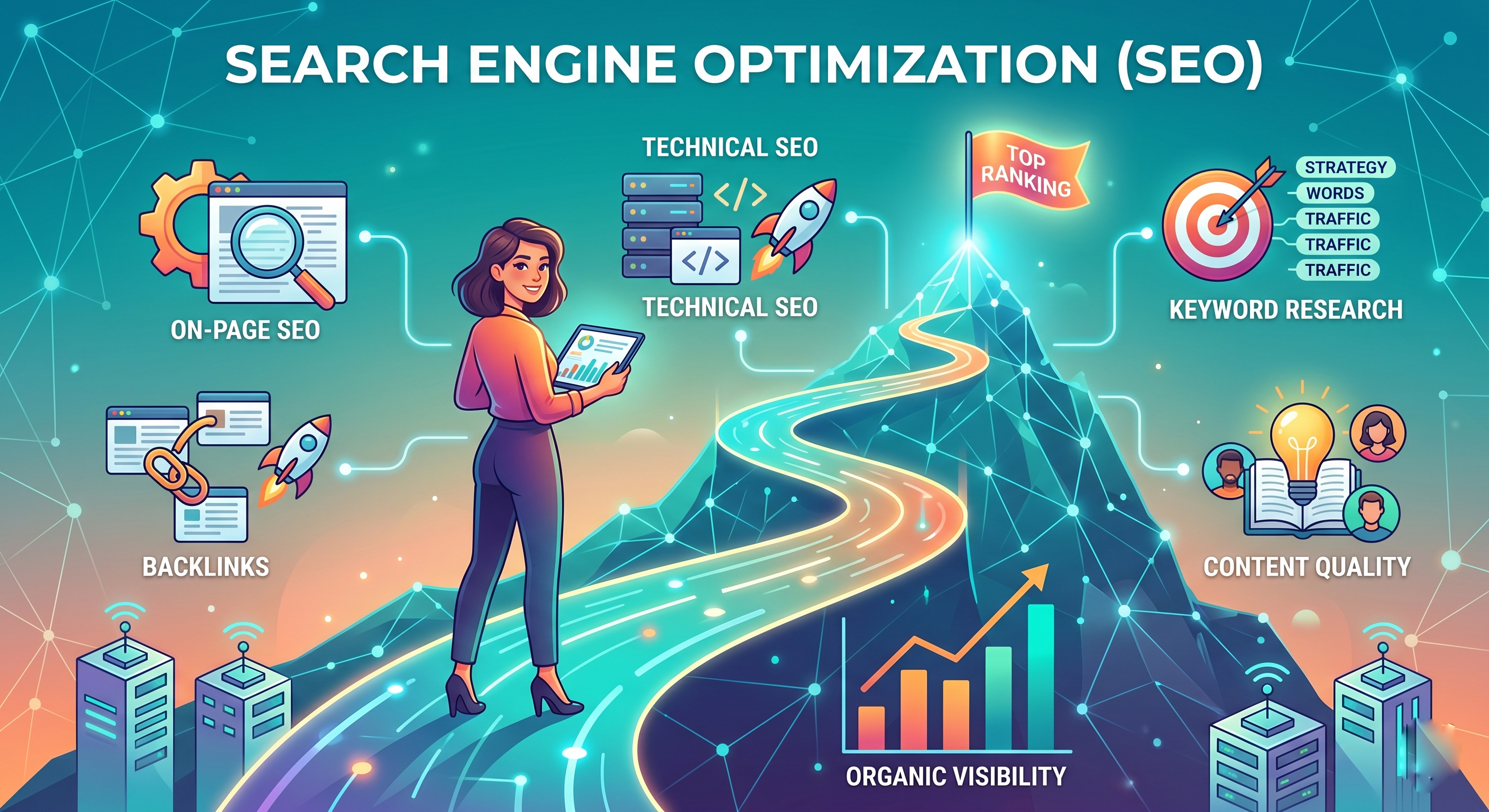
Search Engine Optimization (SEO) is the process of improving your website’s visibility in search engine results. By optimizing your content, website structure, and overall user experience, SEO helps search engines understand your website and rank it higher for relevant searches. Unlike paid advertising, SEO focuses on earning organic traffic, making it a cost-effective way to attract qualified visitors over the long term.
Whether you are a business owner, blogger, e-commerce entrepreneur, or digital marketer, understanding SEO can help you increase online visibility, build brand credibility, drive targeted traffic, and achieve sustainable business growth. As search engines continue to play a major role in how people discover information online, SEO remains one of the most valuable ways to connect with your target audience.
Introduction to Search Engine Optimization (SEO)
What is search engine optimization?
Search Engine Optimization (SEO) is the process of improving a website’s visibility on search engines such as Google, Bing, and Yahoo. It involves optimizing website content, structure, and technical elements to help search engines better understand and rank web pages for relevant search queries. The primary goal of SEO is to increase a website’s position in search engine results pages (SERPs), making it easier for potential customers to discover the business online.
When your website appears higher in search results, it is more likely to attract clicks from users actively searching for information, products, or services related to your business. Unlike paid advertising, SEO focuses on generating organic traffic, which can provide long-term and sustainable growth. A well-executed SEO strategy not only increases website visibility but also helps attract qualified visitors, build brand credibility, improve user experience, and convert visitors into customers or loyal followers.
For Example:-
Business: Local Dental Clinic.
Goal: Attract more patients from the local area.
SEO Actions:–
- Optimize website pages for keywords such as “dentist near me” and “family dental clinic in Chicago.”
- Publish blog articles about oral health and dental care.
- Improve website loading speed and mobile responsiveness.
- Update business information on online directories and map listings.
- Encourage patients to leave online reviews.
Result:
After implementing these SEO improvements over several months, the dental clinic began appearing more frequently in local search results when people searched for dental services in the area. As a result, more potential patients discovered the clinic online, website traffic gradually increased, and the clinic received a higher number of appointment requests and patient inquiries. This improved online visibility helped the business attract new patients and strengthen its presence in the local community.
Why we need to do SEO?
In today’s digital landscape, most people turn to search engines like Google when looking for products, services, answers, or businesses online. If your website does not appear in search results, potential customers may never know your business exists. Search Engine Optimization (SEO) helps improve your website’s visibility, making it easier for people to find you when they search for relevant keywords.
We need SEO because it drives organic traffic to your website without requiring you to pay for every visitor. By optimizing your website’s content, structure, and performance, SEO helps search engines understand your pages and rank them higher in search results. The higher your website ranks, the greater the chances of attracting visitors who are genuinely interested in what you offer.
Think of your website as a physical store. Even if you have excellent products or services, customers cannot visit if they do not know where your store is located. SEO acts like a digital signboard that helps guide potential customers to your website when they are actively searching for solutions online.
Why SEO Matters
- Increases website visibility on search engines.
- Attracts targeted and qualified visitors.
- Builds trust and credibility for your brand.
- Improves user experience and website performance.
- Generates leads, inquiries, and sales.
- Delivers long-term results compared to many paid marketing methods.
- Helps businesses stay competitive in their industry.
By investing in SEO, businesses can reach the right audience, strengthen their online presence, and create sustainable growth over time.
Fundamental of Seo
On page SEO :-
On-Page SEO is the practice of optimizing individual web pages to improve their visibility in search engine results and provide a better experience for users. It involves optimizing content, keywords, HTML elements, and page structure to help search engines understand what a page is about and determine its relevance to specific search queries.
Unlike Off-Page SEO, which focuses on external factors such as backlinks, On-Page SEO deals with elements that you can directly control on your website. Proper on-page optimization helps search engines crawl and index your pages more effectively while making your content easier for visitors to read and navigate.
Key Components of On-Page SEO
- Keyword Optimization: Using relevant keywords naturally throughout the content.
- Title Tags: Creating descriptive and keyword-rich page titles.
- Meta Descriptions: Writing compelling summaries that encourage users to click.
- Header Tags (H1, H2, H3): Organizing content with clear headings and subheadings.
- URL Structure: Using clean and descriptive URLs.
- Image Optimization: Adding alt text and compressing images for better performance.
- Internal Linking: Connecting related pages within the website.
- Content Quality: Creating valuable, informative, and engaging content for users.
- Mobile Friendliness: Ensuring pages work well on smartphones and tablets.
- Page Speed: Improving loading times to enhance user experience.
For Example
Business: Online Fitness Coaching Website
On-Page SEO Actions:
- Create a blog post targeting the keyword “home workout plan for beginners.”
- Add the keyword naturally in the page title, headings, and content.
- Write a compelling meta description to attract clicks.
- Optimize images with descriptive alt text.
- Link to related fitness guides and workout programs.
- Improve page speed and mobile responsiveness.
Result:
As the page becomes better optimized, search engines can more easily understand its content and relevance. Over time, the article may rank higher for fitness-related searches, attract more visitors, increase user engagement, and generate additional leads for the coaching business.
Off page SEO :-
Off-Page SEO refers to activities performed outside your website to improve its authority, credibility, and visibility in search engine results. It focuses on building trust and reputation through external factors such as backlinks, brand mentions, social media engagement, and online relationships. Search engines view these signals as indicators that your website provides valuable and trustworthy content.
A strong Off-Page SEO strategy helps increase your website’s authority, making it more likely to rank higher for relevant search queries. The more high-quality and relevant websites that reference your content, the stronger your website’s reputation becomes in the eyes of search engines.
Key Components of Off-Page SEO
- Backlink Building: Earning links from reputable and relevant websites.
- Guest Posting: Publishing content on other websites to gain exposure and backlinks.
- Social Media Engagement: Promoting content and interacting with audiences on social platforms.
- Brand Mentions: Increasing online references to your business or website.
- Influencer Outreach: Collaborating with industry experts and content creators.
- Online Directories: Listing your business on trusted directories and citation websites.
- Content Promotion: Sharing valuable content across multiple channels to increase visibility.
Example
Business: Online Fitness Coaching Website
Off-Page SEO Actions:
- Publish guest articles on health and fitness blogs.
- Earn backlinks from reputable fitness websites.
- Share content across social media platforms.
- Collaborate with fitness influencers and industry experts.
- Get featured in online directories and industry publications.
Result:
As more reputable websites and online sources link to the fitness coaching website, search engines recognize it as a trusted resource. This increased authority can lead to higher rankings, more organic traffic, greater brand visibility, and an increase in potential customers.arches, attract more visitors, increase user engagement, and generate additional leads for the coaching business.
Keyword Research :-
Keyword Research is the process of identifying the words and phrases that potential customers use when searching for information, products, or services online. It is one of the most important aspects of SEO because it helps businesses understand what their target audience is looking for and create content that matches their search intent.
By selecting the right keywords, businesses can attract more relevant visitors, improve search engine rankings, and increase the chances of generating leads and conversions. Effective keyword research involves analyzing search volume, competition, user intent, and keyword relevance to identify opportunities that can drive valuable organic traffic.
Key Components of Keyword Research
- Search Volume Analysis: Identifying how often a keyword is searched.
- Keyword Difficulty: Evaluating how competitive a keyword is.
- Search Intent: Understanding the purpose behind a user’s search query.
- Long-Tail Keywords: Targeting more specific phrases with lower competition.
- Competitor Analysis: Researching keywords that competitors are targeting.
- Keyword Relevance: Selecting keywords closely related to your products, services, or content.
Example
Business: Online Fitness Coaching Website
Keyword Research Actions:
- Identify topics related to fitness, weight loss, and home workouts.
- Research keywords such as “home workout for beginners,” “weight loss exercises,” and “online fitness coaching.”
- Analyze search volume and competition levels.
- Select keywords that have strong relevance and achievable ranking opportunities.
- Create content optimized around those target keywords.
Result:
By targeting keywords that potential customers are actively searching for, the fitness website can attract more qualified visitors, improve its search rankings, and increase opportunities for lead generation and customer conversions.
Quality Content :-
Quality Content is the foundation of a successful SEO strategy.
Creating quality content is not just about using keywords; it is about delivering meaningful information that helps users solve problems, answer questions, or make informed decisions. Regularly updating content ensures that information remains accurate, fresh, and relevant, which can further improve search engine visibility and user engagement.
Key Components of Quality Content
- Relevance: Creating content that matches user interests and search intent.
- Originality: Providing unique and authentic information.
- Readability: Writing clear, well-structured, and easy-to-understand content.
- Keyword Optimization: Naturally incorporating relevant keywords into the content.
- Content Freshness: Regularly updating information to keep it accurate and relevant.
- Multimedia Integration: Using images, videos, infographics, and other visual elements to enhance engagement.
- User Value: Offering helpful insights, solutions, and actionable information.
Example
Business: E-commerce Store Selling Skincare Products
Quality Content Actions:
- Publish blog articles about skincare routines and common skin concerns.
- Create product guides that help customers choose the right skincare products.
- Add tutorial videos demonstrating how to use different products effectively.
- Design infographics explaining skincare ingredients and their benefits.
- Regularly update existing content with new skincare trends, research, and product recommendations.
Result:
By consistently creating valuable and informative content, the skincare website becomes a trusted resource for customers seeking skincare advice and solutions. As users engage with and share the content, the website can achieve higher search rankings, attract more organic traffic, and increase sales opportunities. search rankings, and increase opportunities for lead generation and customer conversions.
Technical SEO:-
Technical SEO is the process of improving the technical parts of a website so that search engines can easily find, crawl, and understand its content. It helps make your website fast, secure, mobile-friendly, and easy to use. Even if you have great content, your website needs a strong technical setup to perform well in search results.
A well-optimized website provides a better experience for visitors and helps search engines access important pages more easily. This can improve your website’s visibility and rankings on search engines.
Key Components of Technical SEO
- Website Speed Optimization: Making pages load faster for a better user experience.
- Mobile-Friendly Design: Ensuring the website works properly on mobile phones and tablets.
- Website Security (HTTPS): Keeping user information safe with a secure connection.
- Crawlability: Helping search engines easily find and access website pages.
- Indexability: Making sure important pages can appear in search results.
- XML Sitemap: Providing search engines with a list of website pages.
- Structured Data: Giving search engines extra information about your content.
- Fixing Broken Links: Repairing links that lead to missing or incorrect pages.
Example
Business: Online Skincare Store
Technical SEO Actions:
- Reduce image sizes to make pages load faster.
- Make sure the website works well on mobile devices.
- Add an SSL certificate to secure customer data.
- Create and submit an XML sitemap to search engines.
- Fix broken links and redirect old pages.
- Add structured data for products, prices, and customer reviews.
Result:
After making these improvements, search engines can crawl and index the website more easily. Visitors enjoy faster loading pages, smoother navigation, and a better mobile experience. As a result, the website can gain better search rankings, more organic traffic, and increased sales opportunities.es opportunities. search rankings, and increase opportunities for lead generation and customer conversions.
User Experience (UX):-
User Experience (UX) focuses on how visitors interact with your website and how easy it is for them to find information, navigate pages, and complete desired actions. A positive user experience helps visitors stay longer on your website, engage with your content, and increases the likelihood of conversions. Search engines also consider user experience as an important ranking factor because they aim to provide users with the best possible results.A website that is easy to navigate, loads quickly, and offers valuable content creates a better experience for visitors. By improving UX, businesses can reduce bounce rates, increase engagement, and improve overall website performance.
Key Components of User Experience (UX)
- Easy Navigation: Organizing menus and pages so users can quickly find information.
- Clear Website Structure: Creating a logical layout that improves usability.
- Fast Loading Speed: Ensuring pages load quickly across all devices.
- Mobile Responsiveness: Providing a seamless experience on smartphones and tablets.
- Engaging Content: Offering valuable and relevant information that keeps users interested.
- Clear Call-to-Actions (CTAs): Guiding visitors toward desired actions such as purchases or inquiries.
- Readable Design: Using clean layouts, readable fonts, and proper spacing.
Example
Business: Online Travel Booking Website
User Experience (UX) Actions:
- Create a simple and intuitive navigation menu for flights, hotels, and vacation packages.
- Organize travel options with clear filters for destination, price, and travel dates.
- Optimize page loading speed for faster search results.
- Ensure the booking platform works seamlessly on mobile devices.
- Provide detailed travel information, customer reviews, and destination guides.
- Add prominent “Book Now” and “Get a Quote” buttons throughout the website.
Result:
Travelers can quickly find destinations, compare options, and complete bookings with ease. The improved user experience encourages visitors to spend more time exploring travel packages, increases booking conversions, and helps build customer trust and loyalty.s opportunities. search rankings, and increase opportunities for lead generation and customer conversions.
Analytics and Performance Tracking:-
Analytics is the process of collecting, measuring, and analyzing website data to understand how visitors interact with your website. It helps businesses evaluate the effectiveness of their SEO efforts, identify areas for improvement, and make informed decisions based on real user behavior. By regularly monitoring website performance, businesses can optimize their marketing strategies and achieve better results over time.
Tools such as Google Analytics and Google Search Console provide valuable insights into website traffic, user engagement, conversions, and search performance. Tracking key metrics allows businesses to understand what is working well and where improvements are needed.
Key Components of Analytics
- Organic Traffic Monitoring: Tracking visitors who arrive through search engines.
- Keyword Performance: Measuring how target keywords rank in search results.
- Conversion Tracking: Monitoring actions such as purchases, form submissions, or inquiries.
- User Behavior Analysis: Understanding how visitors navigate and interact with the website.
- Bounce Rate Monitoring: Identifying pages where users leave without taking action.
- Traffic Source Analysis: Determining where website visitors are coming from.
- Performance Reporting: Reviewing data to evaluate SEO and marketing efforts.
Example
Business: Online Education Platform
Analytics Actions:
- Monitor organic traffic to course pages using Google Analytics.
- Track keyword rankings for educational topics and online courses.
- Measure course enrollments and newsletter sign-ups as conversions.
- Analyze user behavior to identify the most popular courses and learning resources.
- Monitor bounce rates on landing pages and improve content where needed.
- Review monthly performance reports to identify trends and optimize marketing strategies.
Result:
By regularly analyzing website data, the online education platform gains valuable insights into student interests and website performance. These insights help improve course content, enhance user engagement, increase enrollments, and support long-term growth through data-driven decision-making.
E-Commerce SEO:-
E-Commerce SEO is the process of optimizing an online store to improve its visibility in search engine results and attract potential customers who are searching for products online. It focuses on optimizing product pages, category pages, website structure, and other elements that help search engines understand and rank an e-commerce website.
A well-optimized online store can attract more organic traffic, improve user experience, and increase sales without relying solely on paid advertising. E-Commerce SEO helps shoppers discover products more easily and supports long-term business growth.
Key Components of E-Commerce SEO
- Product Page Optimization: Creating unique product titles, descriptions, and meta tags.
- Keyword Research: Targeting relevant product and category keywords.
- Category Page Optimization: Organizing products into clear and optimized categories.
- Technical SEO: Improving website speed, mobile usability, and crawlability.
- Image Optimization: Using descriptive file names and alt text for product images.
- Internal Linking: Connecting related products and categories throughout the website.
- Structured Data: Adding product information such as pricing, ratings, and availability for search engines.
Example
Business: Online Electronics Store
E-Commerce SEO Actions:
- Optimize product pages with detailed descriptions and relevant keywords.
- Create SEO-friendly category pages for smartphones, laptops, and accessories.
- Improve website loading speed and mobile responsiveness.
- Add optimized images with descriptive alt text.
- Implement structured data for product ratings, prices, and stock availability.
- Link related products to improve navigation and user experience.
Result:
As product and category pages become better optimized, the online store gains higher visibility in search results for relevant product searches. This helps attract more potential customers, increase organic traffic, improve conversions, and generate more online sales.
The Basics of How SEO Works
Understanding how SEO works is one of the most important concepts for anyone learning Search Engine Optimization. SEO works by optimizing different aspects of a website to help search engines like Google understand, crawl, index, and rank its content more effectively. The goal is to improve a website’s visibility in search results and attract more organic traffic from users searching for relevant information, products, or services.
Search engines use complex algorithms to evaluate and rank websites based on factors such as content quality, relevance, user experience, website authority, and technical performance. By optimizing these factors, businesses can improve their chances of appearing higher in search engine results pages (SERPs).
Crawling:-
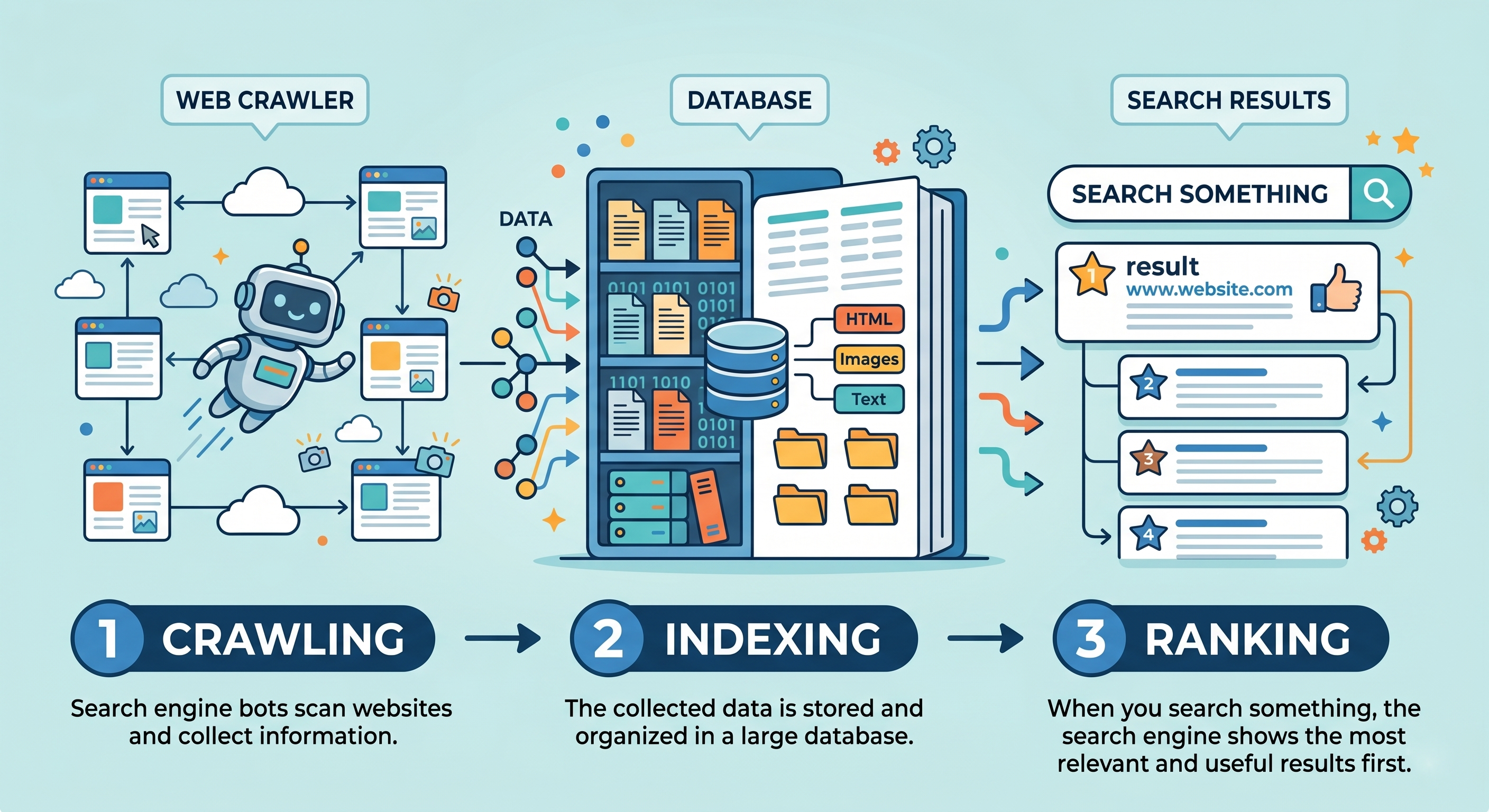
Search engines use bots (also known as crawlers or spiders) to discover, scan, and read web pages across the internet so they can understand what content exists on each page. These bots follow links from one page to another to find new and updated content for search results.
Indexing:-
After crawling a webpage, search engines analyze and store the content in their database (index). This helps them understand what the page is about so it can be shown in relevant search results when users search for related topics.
Ranking:-
Once a page is indexed, search engines evaluate it using hundreds of ranking factors such as content quality, keywords, website authority, and user experience. Based on this evaluation, pages are ranked from most to least relevant for a specific search query.
Displaying Results:-
Finally, search engines display the most relevant and trustworthy pages in the Search Engine Results Pages (SERPs). The higher-ranked pages appear at the top, where they are more likely to get clicks and organic traffic.
Factors That Influence SEO Rankings
- High-quality and relevant content.
- Proper keyword optimization.
- Fast website loading speed.
- Mobile-friendly website design.
- Strong user experience (UX).
- High-quality backlinks from trusted websites.
- Secure website connection (HTTPS).
- Well-structured website architecture.
Example
Business: Online Education Platform
SEO Actions:
- Create informative course pages targeting relevant keywords.
- Publish helpful blog articles and educational resources.
- Improve website speed and mobile usability.
- Build backlinks from educational websites and industry blogs.
- Optimize page titles, headings, and meta descriptions.
- Monitor performance and make improvements based on analytics data.
Result:
As search engines crawl and understand the website’s content, the platform becomes more visible for relevant educational searches. This improved visibility helps attract more organic visitors, increase course enrollments, and strengthen the website’s authority over time.
Search engines work by using advanced algorithms to collect, organize, and rank information from across the web. When a user searches for something, the search engine quickly analyzes its database and shows results that best match the user’s intent and query.
What is a Search Engine and How it’s work?
A search engine is a system that helps you discover information on the web by matching your search query with relevant websites.
Search engines work by using advanced algorithms to collect, organize, and rank information from across the web. When a user searches for something, the search engine quickly analyzes its database and shows results that best match the user’s intent and query.
A search engine is a software system that helps users find information on the internet by entering keywords or queries. It searches through billions of web pages and displays the most relevant results in the form of websites, images, videos, news, and other types of online content.
Crawling in SEO
These crawlers continuously move from one page to another by following internal and external links. As they explore, they collect information about each page, such as text, images, and links, to understand what the content is about and whether it should be included in search results.
Crawling is the first and one of the most important steps in how search engines like Google discover and understand content on the internet. It is the process where search engines use automated programs called crawlers or spiders to scan and explore web pages across websites.
Think of crawlers as digital explorers that travel across the internet 24/7, discovering new pages, updated content, and changes on websites. Their job is to ensure that search engines always have the most up-to-date information available.
Key Points of Crawling
- Crawling is the first step in the SEO process.
- Search engines use bots known as crawlers or spiders.
- Crawlers discover new and updated web pages.
- They follow links to move between different pages and websites.
- Crawling helps search engines find fresh and relevant content.
Example
When a new blog post is published on a website, crawlers visit the page, read its content, and follow any links on it. This helps search engines discover the page and prepare it for indexing and ranking in search results.re organic visitors, increase course enrollments, and strengthen the website’s authority over time.
Indexing in SEO
Indexing is the process where search engines store and organize the information collected from web pages into a large database called an index. After a page is crawled, search engines analyze its content and save important details such as keywords, text, images, meta tags, and links so they can quickly retrieve and display the page in relevant search results.
In simple terms, indexing helps search engines understand what a page is about and decide when it should appear for a user’s search query. If a page is not indexed, it will not show up in search engine results, even if it exists online.
Key Points of Indexing
- Indexing happens after crawling.
- Search engines store web page data in a structured database called an index.
- Important elements like content, keywords, and meta tags are analyzed.
- Indexed pages can appear in search engine results.
- Pages that are not indexed cannot be found through search engines.
Example
When a search engine crawls a blog post about “healthy eating tips,” it analyzes the content and stores it in its index. Later, when someone searches for related topics, the search engine can quickly retrieve and display that blog post in the results.
Ranking in SEO
Processing and ranking is the stage where search engines respond to a user’s search query. When a user types a keyword or question, the search engine first processes the query to understand the intent behind it. It then searches its index to find the most relevant web pages that match the query.
After retrieving relevant pages, search engines use complex algorithms to evaluate and rank them. These algorithms consider multiple factors such as content relevance, keyword usage, content quality, user experience, website speed, mobile friendliness, and overall website authority. Based on this evaluation, the search engine arranges the results from most relevant to least relevant.
Key Points of Indexing
- Key Points of Processing and Ranking
- Happens after a user enters a search query.
- Search engines analyze the intent behind the query.
- Relevant pages are retrieved from the index.
- Algorithms evaluate pages based on multiple ranking factors.
- Results are ordered from most relevant to least relevant.
- Search engines store web page data in a structured database called an index.
- Important elements like content, keywords, and meta tags are analyzed.
- Indexed pages can appear in search engine results.
- Pages that are not indexed cannot be found through search engines.
Example
If a user searches for “best digital marketing courses”, the search engine processes the query, finds related pages in its index, and ranks them based on quality, relevance, and authority. The most helpful and trusted pages appear at the top of the search results, while less relevant pages appear lower.
User Interaction and Feedback in SEO
User Interaction and Feedback refers to how users behave after seeing search results and how search engines use this behavior to improve future rankings. It includes actions such as clicks, time spent on a webpage, bounce rate, return visits, and engagement with content. Search engines analyze these signals to understand whether a page is truly helpful and relevant to users.
When users consistently click on a result, stay longer on the page, and interact with the content, it indicates that the page provides value. On the other hand, if users quickly leave a page or return to search results, it may signal that the content is not useful or relevant. These behavioral signals help search engines refine and improve ranking accuracy over time.
Key Points of User Interaction and Feedback
- Measures how users interact with search results and web pages.
- Includes clicks, bounce rate, and time spent on page.
- Helps search engines understand content usefulness.
- Positive engagement improves ranking potential.
- Negative signals may reduce visibility in search results.
Example
If a user searches for “best digital marketing courses” and clicks on a website but stays for a long time reading the content, it signals that the page is helpful. However, if many users quickly leave the page and return to search results, search engines may reduce its ranking over time and show other more relevant pages instead.
What is search engine result page
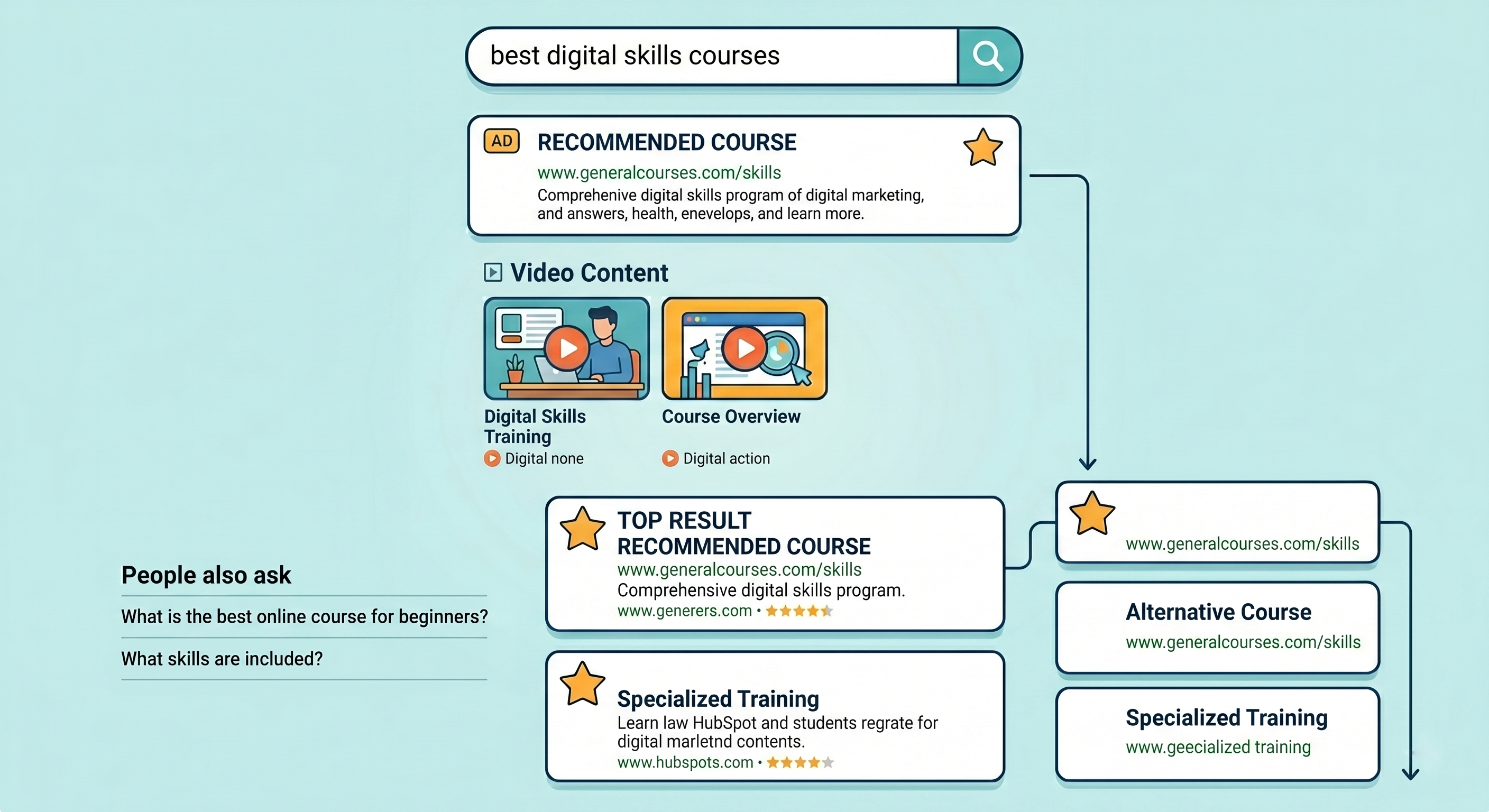
A Search Engine Results Page (SERP) is the page that appears after a user enters a search query on a search engine like Google, Bing, or Yahoo. It displays a list of relevant results that match the user’s search, including websites, images, videos, news, featured snippets, and ads.
The main purpose of a SERP is to provide users with the most relevant and useful information based on their search intent. Search engines use complex algorithms to decide which pages appear and in what order, depending on factors like relevance, quality, and authority.
Paid Searches
Paid searches are sponsored listings that appear on the SERP through advertising platforms such as Google Ads. Businesses pay search engines to display their websites for specific keywords. These results are usually marked with labels such as “Ad” or “Sponsored” and often appear at the top or bottom of the search results page.
- Appear through paid advertising campaigns.
- Usually displayed above or below organic results.
- Marked as sponsored or ads.
- Provide immediate visibility in search results.
- Traffic is generated through advertising spend.
Organic Searches
Organic searches are non-paid listings that appear on the SERP based on their relevance and quality. Search engines rank these pages using algorithms that evaluate factors such as content quality, keyword relevance, user experience, and website authority.
- Appear naturally based on SEO efforts.
- Do not require payment for placement.
- Ranked according to search engine algorithms.
- Generate long-term and sustainable traffic.
- Depend on content quality and website optimization.
Type of Search engine optimization
Search Engine Optimization includes several types, and here are the primary ones.
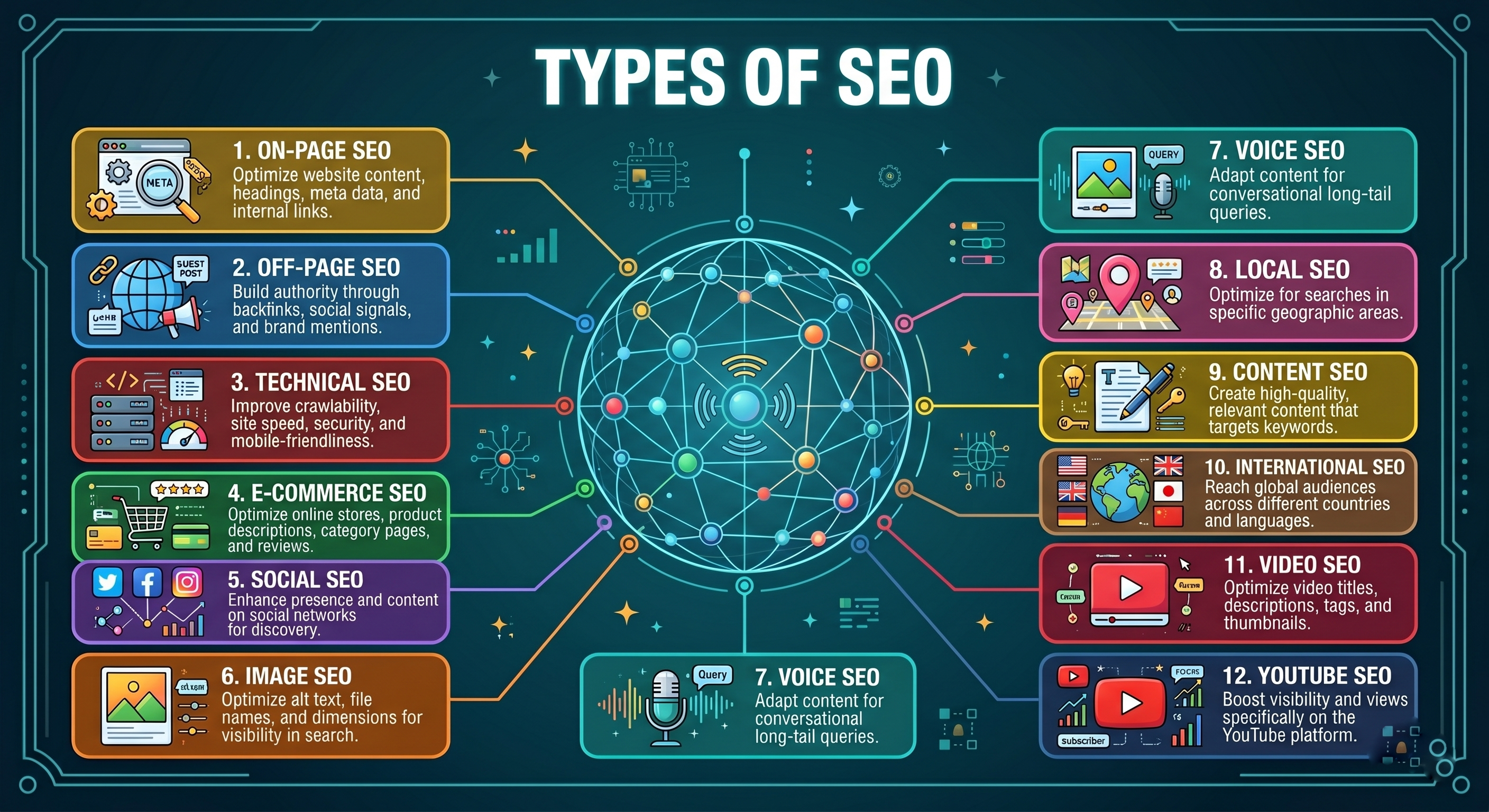
On – Page SEO
On-Page SEO refers to the optimization of individual web pages to improve their visibility and ranking in search engine results pages (SERPs). It involves making changes directly on a webpage to ensure it is more relevant, useful, and easier for both search engines and users to understand.
By improving on-page elements such as content quality, keywords, headings, titles, and internal links, websites can increase their chances of ranking higher in search results and attracting more organic traffic.
Content Optimization: Creating high-quality and relevant content for users.
Title Tags: Writing clear and keyword-focused page titles.
Meta Descriptions: Adding short summaries that encourage clicks.
Headings (H1, H2, H3): Structuring content in a clear and organized way.
Keyword Usage: Naturally including relevant keywords in content.
Internal Linking: Connecting related pages within the website.
Image Optimization: Using proper file names and alt text for images.
URL Structure: Creating clean and readable URLs.
Example
If a webpage is targeting the keyword “best digital marketing courses”, On-Page SEO ensures the keyword is included in the title, headings, content, and meta description. The page is also structured clearly with useful information and optimized images, helping it rank higher in search results and attract more visitors.
Off – Page SEO
Off-Page SEO refers to all the activities performed outside of your website to improve its ranking, authority, and online reputation in search engine results. It mainly focuses on building trust signals that show search engines your website is valuable, credible, and worth ranking higher.
One of the most important parts of Off-Page SEO is building backlinks, which are links from other websites pointing to your site. Along with backlinks, factors like social media presence, brand mentions, and online engagement also help improve your website’s authority.
Backlink Building: Getting links from other trusted and relevant websites.
Social Media Engagement: Promoting content and interacting with users on social platforms.
Brand Mentions: Increasing awareness of your brand across the internet.Guest Posting: Publishing content on other websites to gain exposure and links.
Influencer Outreach: Collaborating with influencers to reach a wider audience.
Page Speed: Ensuring web pages load quickly to provide a better user experience and support SEO performance.
Crawlability: Making it easy for search engine bots to discover, crawl, and understand website content.
Mobile Friendliness: Optimizing websites for mobile devices to ensure a seamless experience for mobile users.
Example
If a blog about digital marketing is shared and linked by other reputable websites, search engines see it as more trustworthy and authoritative. Similarly, if the content is widely shared on social media platforms, it increases visibility and can indirectly improve search rankings.
Technical SEO
Technical SEO refers to optimizing the technical aspects of a website and server to help search engine crawlers easily crawl, index, and understand your website. It ensures that your website is properly structured, fast, secure, and accessible so that search engines can process it efficiently and rank it effectively in search results.
Unlike content-focused SEO, Technical SEO deals with the backend and performance of a website. A strong technical foundation helps improve both search engine visibility and user experience.
Website Crawling: Making it easy for search engine bots to discover and access all important pages on the website.
Indexing Optimization: Ensuring that web pages are properly indexed and available in search engine results.
Site Speed: Improving website loading time to enhance user experience and search engine performance.
Mobile Friendliness: Making the website responsive and accessible across all mobile devices.
Secure Website (HTTPS): Protecting user data through a secure and encrypted connection.
XML Sitemap: Providing search engines with a roadmap of the website’s pages for easier crawling and indexing.
Robots.txt File: Instructing search engine crawlers on which pages or sections of the website should or should not be crawled.
Fixing Errors: Identifying and resolving technical issues that may affect website performance and indexing
Page Speed: Optimizing individual page loading times to improve user experience and search rankings.
404 Error Code: Monitoring and fixing “Page Not Found” errors to prevent poor user experience and crawling issues.
301 Redirection: Permanently redirecting old URLs to new URLs to preserve SEO value and guide users correctly.
Broken Links: Detecting and repairing internal and external links that lead to non-existent pages
.AMP (Accelerated Mobile Pages): Creating lightweight pages that load faster on mobile devices.
Structured Data: Adding schema markup to help search engines better understand website content and display rich results.
Preferred Domain Version: Choosing a preferred version of the website (www or non-www) to avoid duplicate content issues and maintain consistency.
Example
If a blog about digital marketing is shared and linked by other reputable websites, search engines see it as more trustworthy and authoritative. Similarly, if the content is widely shared on social media platforms, it increases visibility and can indirectly improve search rankings.
E-commerce SEO
E-commerce SEO refers to the process of improving the visibility and organic rankings of an online store in search engines like Google and Bing. It focuses on optimizing product pages, category pages, and the overall website structure so that customers can easily find products when searching online.
Product Page Optimization: Writing clear titles, descriptions, and keywords for each product.
Category Page Optimization: Structuring product categories in a simple and SEO-friendly way.
Keyword Research: Finding search terms customers use to discover products.
Technical SEO: Improving site speed, mobile usability, and crawlability.
Image Optimization: Using optimized product images with proper alt text.
Internal Linking: Connecting related products and categories for better navigation.
User Experience (UX): Ensuring easy navigation and smooth shopping experience.
Structured Data: Adding product schema for rich search results like price and ratings.
Example
If an online store sells mobile phones, E-commerce SEO helps optimize product pages like “best budget smartphones” or “latest Android phones.” When users search for these terms, the optimized pages appear in search results, bringing targeted visitors who are more likely to purchase.
Social SEO
Social SEO refers to the practice of optimizing your social media profiles and content so they appear in search results on platforms like Instagram, TikTok, YouTube, and also in traditional search engines like Google. It focuses on improving the visibility of social content by making it more searchable, relevant, and engaging for users.
- In simple terms, Social SEO helps people discover your content when they search for topics, hashtags, or keywords related to your niche. It combines social media optimization with search engine principles to increase reach, engagement, and brand awareness.
Profile Optimization: Using clear bios, keywords, and consistent branding across social accounts.
Keyword Usage: Adding relevant keywords in captions, titles, and descriptions.
Hashtag Strategy: Using targeted and trending hashtags to improve discoverability.
Engaging Content: Creating content that encourages likes, shares, comments, and saves.
Video Optimization: Using strong titles, descriptions, and tags on video platforms.
Consistency: Posting regularly to build authority and audience trust.
Cross-Platform Visibility: Sharing content across multiple social channels to increase reach.
Example
If a fitness creator posts workout videos on YouTube and optimizes titles like “10-minute home workout for beginners”, uses relevant keywords, and adds proper descriptions, their videos are more likely to appear in YouTube search results and even Google video results. This increases views, engagement, and audience growth.
Image SEO
Image SEO is the process of optimizing website images so that search engines like Google can easily find, understand, and rank them in both web and image search results. It focuses on improving image quality, relevance, and technical setup to help images appear higher in search results and drive additional organic traffic to a website.
- By properly optimizing images, websites can improve loading speed, enhance user experience, and increase visibility in Google Images and other visual search platforms.
Descriptive File Names: Using clear and relevant names for image files.
Alt Text Optimization: Adding descriptive text to help search engines understand images.
Image Compression: Reducing file size to improve page loading speed.
Proper Format Selection: Using formats like JPEG, PNG, or WebP for better performance.
Responsive Images: Ensuring images display correctly on all devices.
Image Sitemaps: Helping search engines discover image content more easily.
Contextual Relevance: Placing images near relevant content on the page.
Example
If a website publishes a blog about digital marketing tips, adding optimized images with proper file names like digital-marketing-strategy.jpg and descriptive alt text helps search engines understand the image. As a result, the images can appear in Google Image Search, bringing additional visitors to the website.
Voice SEO
Voice SEO refers to the practice of optimizing a website so that its content can be easily discovered, understood, and delivered through voice-enabled search devices such as Google Assistant, Siri, Alexa, and other smart assistants. Unlike traditional SEO, Voice SEO focuses on conversational search patterns and natural language queries that people use when speaking.As voice search continues to grow, users are increasingly asking complete questions instead of typing short keywords. Voice SEO helps websites provide direct, relevant answers to these spoken searches, improving their chances of appearing in voice search results and featured responses.
Natural Language Optimization: Creating content that reflects the way people speak in everyday conversations.
Question-Focused Content: Answering common user questions clearly and directly.
Featured Snippet Targeting: Structuring content to increase the likelihood of being selected as a voice search answer.
Local Search Optimization: Improving visibility for location-based searches and “near me” queries.
Mobile-Friendly Design: Ensuring the website performs well on smartphones and tablets.
Website Speed: Maintaining fast-loading pages for a better user experience and search performance.
Example
Suppose a user asks, “Where can I find the best digital marketing training near me?” A website that provides clear answers, optimized local information, and conversational content is more likely to be selected by a voice assistant as the preferred response. This can improve visibility, attract targeted visitors, and increase engagement.
Local SEO
Local SEO (Local Search Engine Optimization) is the practice of optimizing your online presence to improve visibility in location-based search results. It helps businesses attract more customers from nearby areas who are actively searching for products or services using queries like “near me” or city-specific searches.
- Local SEO is especially important for brick-and-mortar stores, restaurants, clinics, salons, and local service providers that want to appear prominently in local search results and on Google Maps. It focuses on making a business more discoverable when users search for services within a specific geographic area.
Google Business Profile Optimization: Keeping business information accurate and updated.
Local Keywords: Using city-based and “near me” search terms in content.
Customer Reviews: Encouraging and managing online reviews to build trust.
Local Citations: Listing the business in online directories and local platforms.
Map Listings: Improving visibility on Google Maps and location results.
NAP Consistency: Ensuring Name, Address, and Phone number are consistent across platforms.
Location Pages: Creating dedicated pages for specific service areas.
Example
If someone searches for “best digital marketing agency in Jamnagar”, Local SEO helps nearby agencies appear in search results and map listings. By optimizing their Google Business Profile, collecting reviews, and using location-based keywords, the business can attract more local clients and increase inquiries.
Content SEO
Content SEO refers to creating and optimizing digital content, such as blog posts, articles, product pages, videos, and guides to improve its visibility on search engines like Google and attract organic (unpaid) traffic.It focuses on producing high-quality, relevant, and well-structured content that matches user search intent. When content is properly optimized with the right keywords, headings, and useful information, it becomes easier for search engines to understand and rank it higher in search results.
Keyword Optimization: Using relevant search terms naturally in content.
High-Quality Content: Creating valuable, informative, and engaging material.
Search Intent Matching: Writing content that answers what users are looking for.
Proper Structure: Using headings, subheadings, and short paragraphs for readability.
Content Freshness: Updating old content to keep it relevant.
Multimedia Use: Adding images, videos, and infographics to improve engagement.
Internal Linking: Connecting related pages within the website.
Example
If a website publishes a blog titled “Beginner Guide to Digital Marketing”, and it is optimized with relevant keywords, clear headings, and useful explanations, it has a better chance of ranking on Google. As more users find and read the content, the website gains higher visibility and steady organic traffic.
International SEO
International SEO is the process of optimizing a website so that search engines can easily understand which countries and languages the business is targeting. It helps websites rank in different regions and reach users across multiple countries with relevant, localized content.
This type of SEO is important for businesses that operate globally or serve audiences in different languages. It ensures that users see the correct version of a website based on their location, language preferences, and search behavior.
Video SEO
Video SEO is the process of optimizing video content so it ranks higher in search engine results and video platforms like YouTube. It helps search engines understand what a video is about and improves its visibility when users search for related topics.
- By optimizing video titles, descriptions, tags, and thumbnails, businesses can increase views, engagement, and organic traffic. Video SEO is especially important because video content is highly engaging and often appears in both Google search results and dedicated video search sections.
YouTube SEO
YouTube SEO is the process of optimizing videos and channels to improve visibility and ranking on YouTube search results as well as Google video search. It focuses on helping YouTube understand what a video is about so it can be recommended to the right audience.
By optimizing different elements like titles, descriptions, thumbnails, tags, and engagement signals, creators can increase views, watch time, subscribers, and overall channel growth. YouTube SEO is important because it helps videos reach more people without relying only on paid promotions.
All search engines work on the same basic process (crawl → index → rank), but each one uses different algorithms and ranking factors, which is why search results can vary between Google, Bing, Yahoo, and others.