What Is Off-Page SEO? A Complete Beginner’s Guide
Off-Page SEO focuses on improving your website’s authority, trustworthiness, and online reputation through activities that happen beyond your website. While On-Page SEO is about optimizing your content and website structure, Off-Page SEO helps search engines understand how other websites, communities, and users view your content.
Think of Off-Page SEO as building your website’s reputation. When trusted websites mention your business, link to your content, or recommend your resources, search engines see these signals as signs that your website provides value. As your online reputation grows, search engines gain more confidence that your content deserves to be recommended.
For example, if you publish a detailed guide about digital marketing and several reputable marketing websites reference your article, those mentions can strengthen your website’s credibility over time.
Why Is Off-Page SEO Important?
Search engines want to recommend websites that users can trust. Creating excellent content is important, but it is only part of the equation. Search engines also look for external signals that show your website has earned recognition from others.
Effective Off-Page SEO can help you:
- Build website authority.
- Increase search engine rankings.
- Improve brand awareness.
- Generate referral traffic.
- Earn customer trust.
- Strengthen your online reputation.
- Support long-term SEO growth.
A website that is regularly recommended by trusted sources is generally considered more reliable than one with no external recognition.
On-Page SEO vs Off-Page SEO
Although both are essential, they focus on different aspects of SEO.
| On-Page SEO | Off-Page SEO |
|---|---|
| Optimizes your website. | Builds authority outside your website. |
| Content optimization. | Backlinks from other websites. |
| Title tags and headings. | Brand mentions. |
| Internal linking. | Guest posting. |
| Image optimization. | Customer reviews. |
| Website speed. | Social sharing and community engagement. |
The best SEO strategy combines both. High-quality content attracts visitors, while Off-Page SEO helps build the trust needed for stronger search visibility.
Key Elements of Off-Page SEO
1. Backlinks
Backlinks are links from other websites pointing to your website. They are one of the most recognized Off-Page SEO signals because they can indicate that other publishers find your content useful.
However, quality matters far more than quantity. A single backlink from a well-respected and relevant website is often more valuable than many links from low-quality or unrelated sites.
Instead of trying to collect as many backlinks as possible, focus on publishing content that people naturally want to reference.
2. Brand Mentions
People may mention your business, products, or website online without linking directly to you. These mentions can appear in blog posts, news articles, podcasts, online communities, forums, or social media discussions.
Mentions from trusted publications, industry websites, respected forums, and podcasts can strengthen brand awareness even when they do not include a hyperlink. Over time, consistent positive mentions help show that people are talking about your business and recognizing your expertise.
3. Guest Posting
Guest posting involves writing high-quality articles for other websites in your industry.
A useful guest article should educate readers rather than simply promote your business. By sharing your knowledge on reputable websites, you can introduce your brand to new audiences while building credibility.
Focus on contributing genuinely helpful content instead of publishing articles solely to obtain backlinks.
4. Customer Reviews
Customer reviews are especially important for local businesses. Positive reviews help potential customers make informed decisions and demonstrate trust.
Encourage satisfied customers to leave honest reviews after purchasing your products or services. Responding professionally to both positive and negative feedback also helps build credibility.
For local businesses, reviews on business directories, map listings, and local platforms can be especially valuable because they influence both visibility and customer trust.
Never buy fake reviews or ask people to leave misleading feedback, as this can damage your reputation.
5. Social Media Engagement
Although social media activity is not a direct ranking factor, it can increase the visibility of your content.
When people share your articles, videos, or infographics, more users discover your content. This increased exposure can lead to additional website visits, brand awareness, and opportunities for other websites to reference your content.
The goal is not simply to collect likes but to create content that people genuinely find useful and want to share. Social media likes alone do not directly improve rankings, but they can help your content reach the right audience.
6. Digital PR
Digital PR involves earning online coverage through news websites, industry publications, interviews, research reports, or expert commentary.
Publishing original research, surveys, or useful industry insights often attracts attention from journalists and bloggers, helping your website earn high-quality mentions and backlinks naturally.
What I Learned About Building Backlinks
When I first started learning SEO, I believed that getting as many backlinks as possible would improve rankings. Over time, I realized that a few relevant backlinks from trusted websites were far more valuable than dozens of low-quality links.
Publishing detailed guides and sharing useful resources generated better results than actively chasing links. The more helpful the content was, the more naturally people wanted to reference it. That experience changed how I approached Off-Page SEO and made me focus more on value, relevance, and trust.
How to Build Off-Page SEO Naturally
The safest and most sustainable way to improve Off-Page SEO is by creating content that deserves attention.
Some effective approaches include:
- Publishing detailed guides and tutorials.
- Creating original research or surveys.
- Designing helpful infographics.
- Writing case studies based on real projects.
- Sharing practical tips and industry insights.
- Collaborating with experts.
- Participating in relevant online communities.
These strategies encourage natural mentions instead of trying to manipulate search rankings.
Off-Page SEO Workflow
A simple workflow can help beginners understand how Off-Page SEO grows over time.
Create Helpful Content
↓
Share It With Your Audience
↓
People Discover It
↓
Other Websites Mention It
↓
Earn Natural Backlinks
↓
Build Authority
↓
Improve Search Visibility
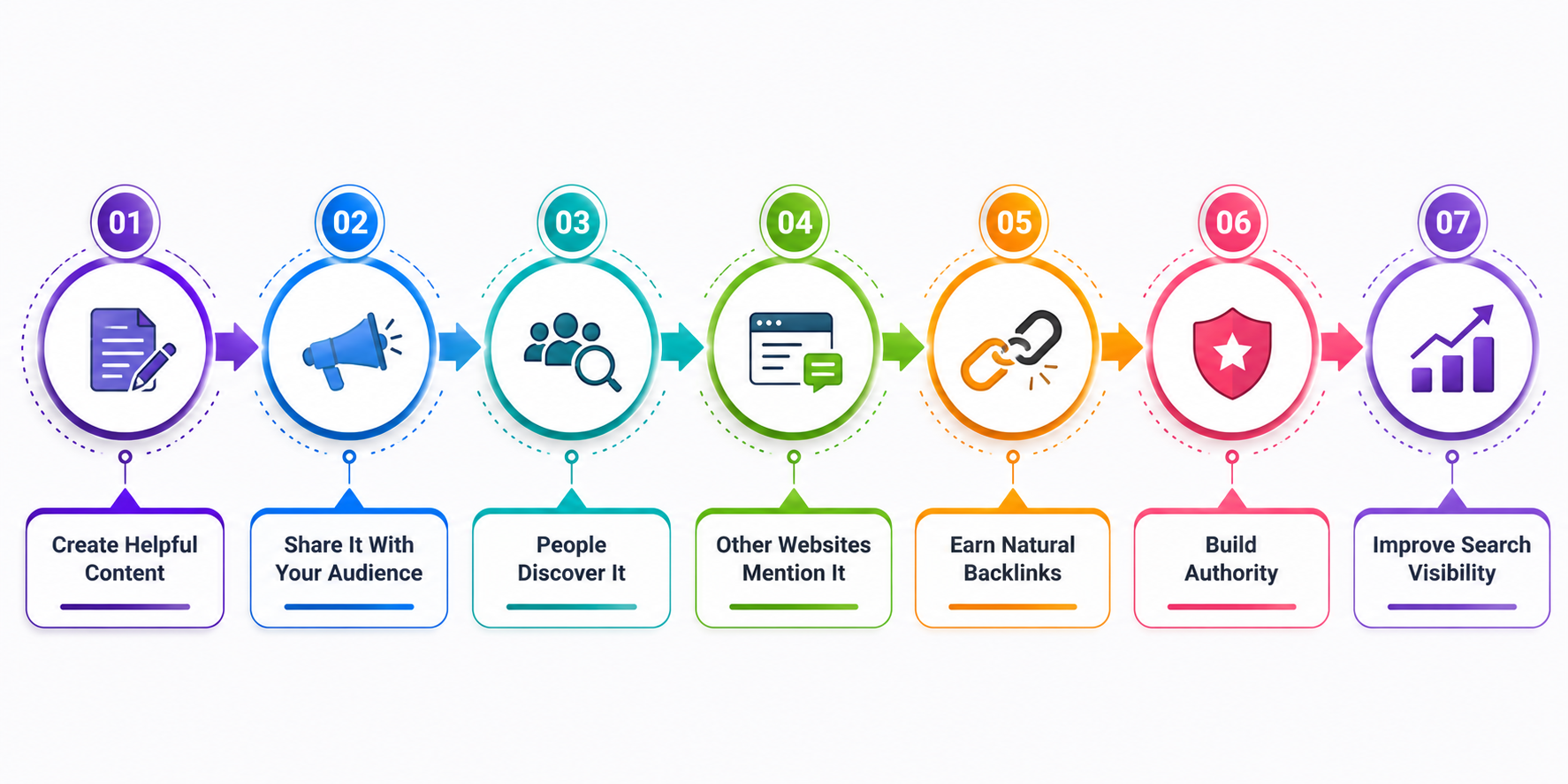
This process works best when your content is genuinely useful and easy to share.
Case Study
A website published a detailed beginner’s SEO guide. Instead of emailing hundreds of websites asking for backlinks, the team updated the guide regularly, shared it in professional communities, and created an accompanying infographic.
Over time, bloggers and educators naturally began linking to the resource because it was useful and easy to reference. This increased both referral traffic and search visibility without relying on aggressive link-building tactics.
Real-Life Example
Imagine you publish a comprehensive article explaining how beginners can learn SEO.
Because the guide is detailed, well-structured, and regularly updated, other bloggers begin referencing it in their own articles. A digital marketing newsletter includes it as a recommended resource, and several instructors share it with their students.
As more trusted websites recommend your guide, your website gains additional referral traffic and builds a stronger reputation. Over time, these positive signals can contribute to improved search visibility.
Common Off-Page SEO Mistakes
Many beginners make mistakes that can limit their website’s growth.
Avoid:
- Buying backlinks.
- Joining link exchange schemes.
- Posting links in unrelated forums.
- Publishing low-quality guest posts.
- Creating spam comments for backlinks.
- Purchasing fake reviews.
- Focusing only on quantity instead of quality.
Search engines are increasingly effective at identifying manipulative practices, so it is better to invest in building genuine authority.
About Off-Page SEO
Off-Page SEO is often misunderstood. Here are some common myths and why they are incorrect.
Myth 1: More backlinks always mean better rankings
This is false. A large number of low-quality backlinks can be less valuable than a small number of relevant, trustworthy links. Search engines care about quality, relevance, and natural growth.
Myth 2: Social media likes directly improve rankings
This is also false. Social media engagement can increase visibility and help more people discover your content, but likes themselves are not a direct ranking factor.
Myth 3: Buying backlinks is a shortcut to success
Buying backlinks may seem like a fast solution, but it can violate search engine guidelines and harm your website in the long run. Sustainable SEO depends on earning trust, not purchasing it.
Myth 4: Every backlink has the same value
Not all backlinks are equal. A link from a respected industry website is usually far more valuable than a link from an unrelated or low-quality site.
Understanding these myths helps you focus on strategies that build long-term authority instead of short-term tricks.
Best Practices for Off-Page SEO
To improve your website’s reputation over time:
- Publish original and helpful content.
- Build relationships within your industry.
- Earn backlinks naturally.
- Encourage genuine customer reviews.
- Share valuable content on social media.
- Monitor mentions of your brand.
- Keep your business information consistent across trusted directories.
- Focus on long-term trust instead of short-term shortcuts.
Off-Page SEO Checklist
Use this checklist to stay organized while improving your Off-Page SEO.
| Task | Done |
|---|---|
| Publish valuable content. | ☐ |
| Earn natural backlinks. | ☐ |
| Monitor brand mentions. | ☐ |
| Encourage genuine reviews. | ☐ |
| Build relationships. | ☐ |
| Share useful content. | ☐ |
| Avoid link schemes. | ☐ |
| Update important content. | ☐ |
This checklist can help you focus on practical actions that support long-term growth.
Tools That Can Help
Several tools can help you monitor your Off-Page SEO efforts.
| Tool | Purpose |
|---|---|
| Google Search Console. | Monitor backlinks and search performance. |
| Google Alerts. | Track online mentions of your brand. |
| Ahrefs. | Analyze backlinks and referring domains. |
| Semrush. | Monitor authority and backlink growth. |
| Moz Link Explorer. | Evaluate link quality and domain authority. |
These tools help you understand how your website is being referenced across the web and identify opportunities for improvement.
Frequently Asked Questions
Is Off-Page SEO only about backlinks?
No. Backlinks are important, but Off-Page SEO also includes brand mentions, customer reviews, guest posting, digital PR, and building a trustworthy online reputation.
How long does Off-Page SEO take to show results?
Off-Page SEO is a long-term strategy. Building authority naturally takes time, and improvements may become noticeable over several months rather than immediately.
Can social media improve Off-Page SEO?
Social media can increase the visibility of your content and help more people discover it. While social shares are not a direct ranking factor, they can contribute to brand awareness and create opportunities for natural backlinks.
Should I buy backlinks?
No. Buying backlinks or participating in link schemes violates search engine guidelines and may harm your website’s long-term performance. Focus on earning links through valuable content instead.
Remember
Off-Page SEO is not about chasing backlinks. It is about earning trust by creating valuable content and building genuine relationships within your industry.
Conclusion
Off-Page SEO is about building trust beyond your website. While creating high-quality content is essential, earning recognition from other websites, customers, and industry professionals helps demonstrate that your content is valuable.
The most effective Off-Page SEO strategy focuses on providing genuine value, building meaningful relationships, and earning authority naturally. By consistently publishing helpful content, strengthening your online reputation, and connecting your content to related topics through internal links, you create a strong foundation for sustainable search engine growth.