What Is Digital Marketing?
Online marketing, commonly known as digital marketing, involves promoting a business, brands, services through digital platforms such as search engines, social media networks, websites, and email campaigns. It helps organizations attract customers, strengthen their brand presence, and achieve business objectives.
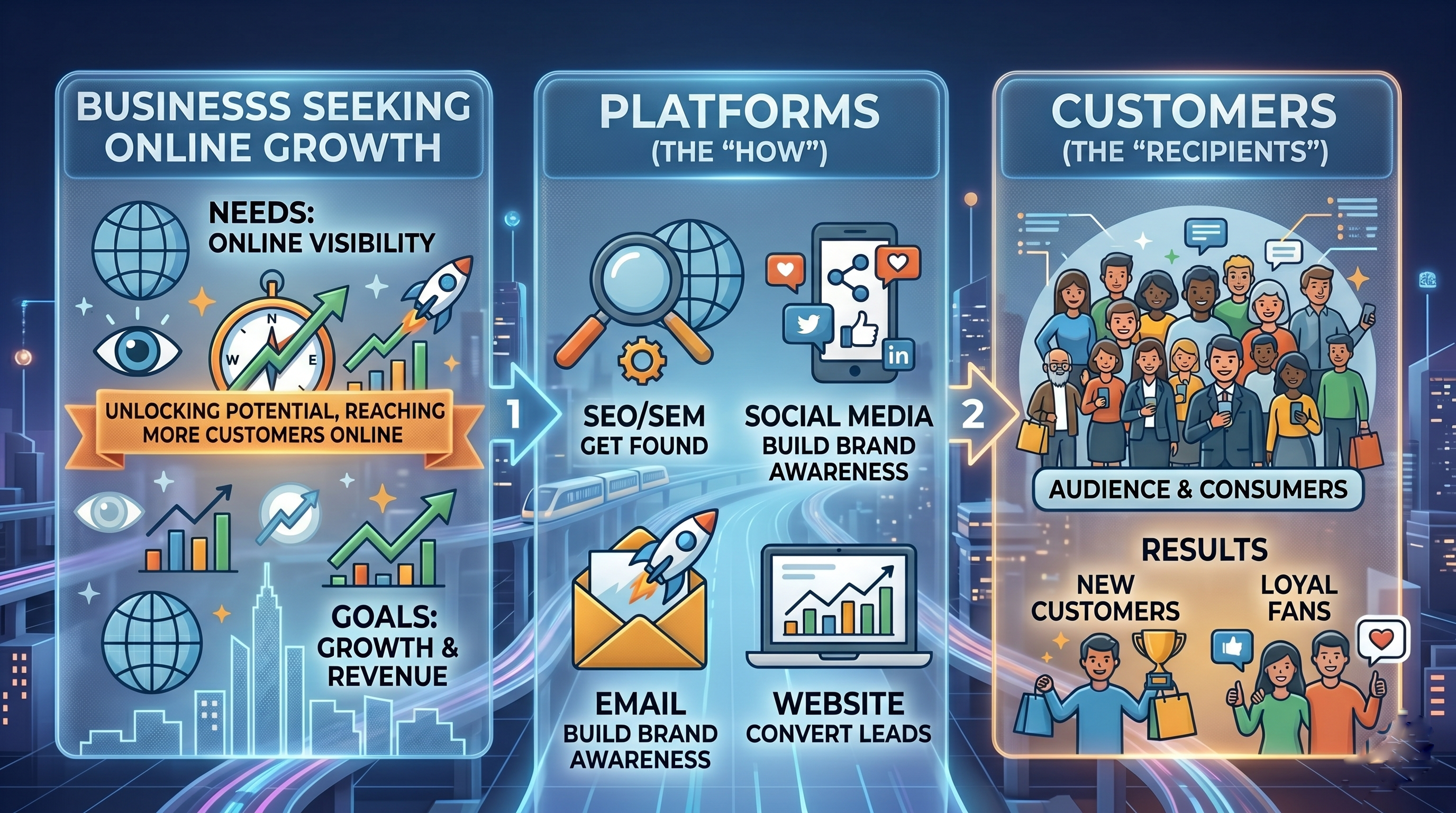
In today’s competitive digital landscape, many businesses rely on digital marketing agencies to expand their reach, attract new customers, and establish a strong and lasting online presence.
Here are some simple and easy-to-understand examples:
1.When you scroll using reels on Instagram or Facebook, sometimes you will see ads in between the videos, like a clothing brand or a product that matches your interests. This is called digital marketing, where businesses promote their products or services online to reach the right audience and customers.
2.When you see an advertisement before or while you start a video on YouTube, that is an example of digital marketing. These ads are a form of video marketing. Where businesses promote their products, brand and services through shorts, engaging videos.
3.They are often shown based on your interests and viewing behavior, making them a targeted and effective way for companies to reach the right audience online.
Some KEY Takeaways of Digital Marketing
- Digital marketing is the use of internet or online platforms (digital channels) to promote products, services.
- It helps businesses reach a massive audience quickly and effectively.
- It allows us to target or craft our audience for ads based on user interests, behavior, and search activity.
- Platforms like Instagram, Facebook, and YouTube are commonly used for its ads and promotions.
- It will allow businesses to measure performance and improve campaigns easily.
- It will play a major role in helping brands grow and connect with customers online.
- It includes different methods to promote our services like social media marketing, video ads, email marketing, and search engine ads.
Types Of Digital Marketing
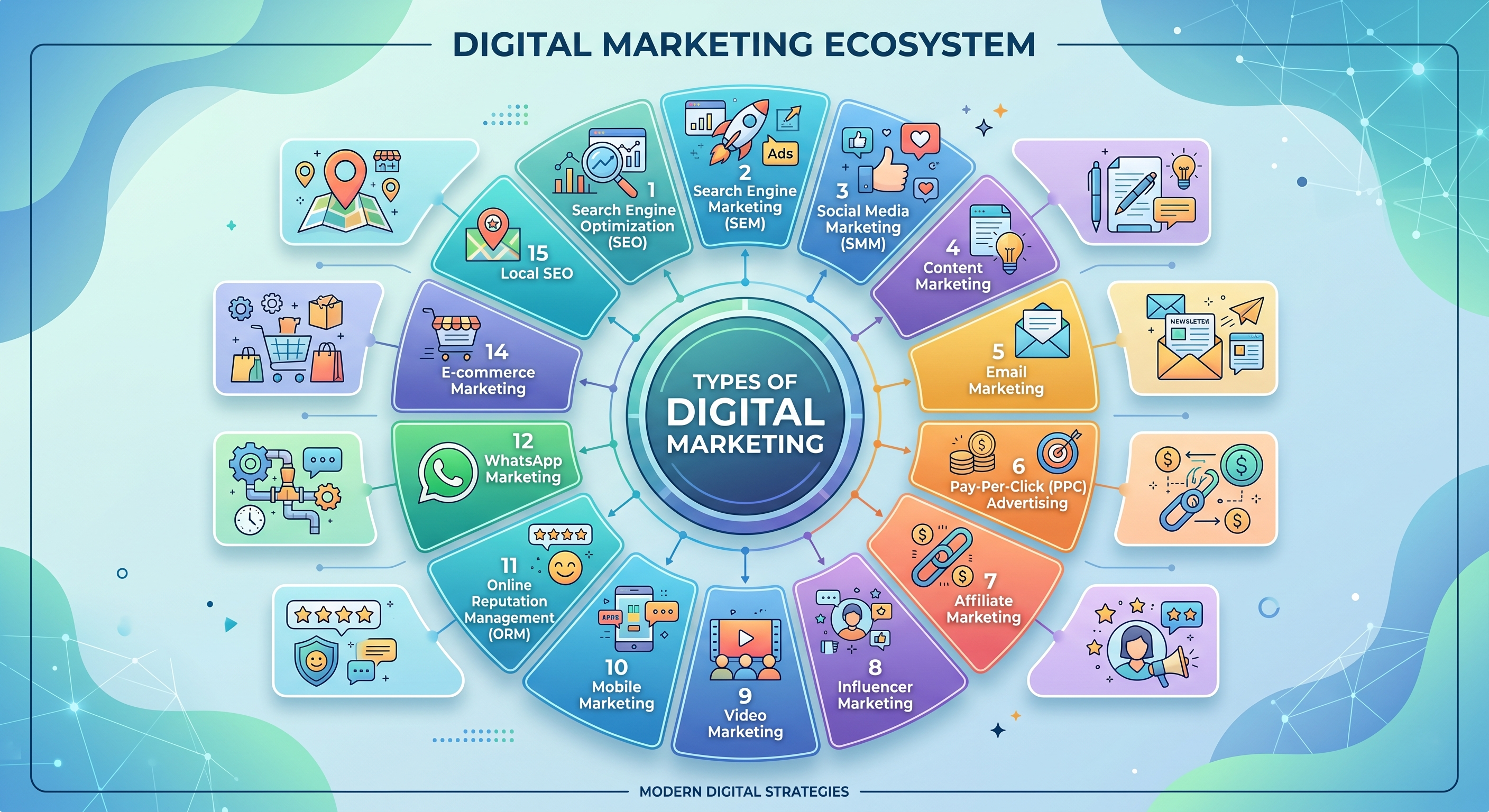
Digital marketing includes a variety of online marketing methods used to promote businesses, products, and services across digital platforms.
1. SEO ( Search Engine Optimization )
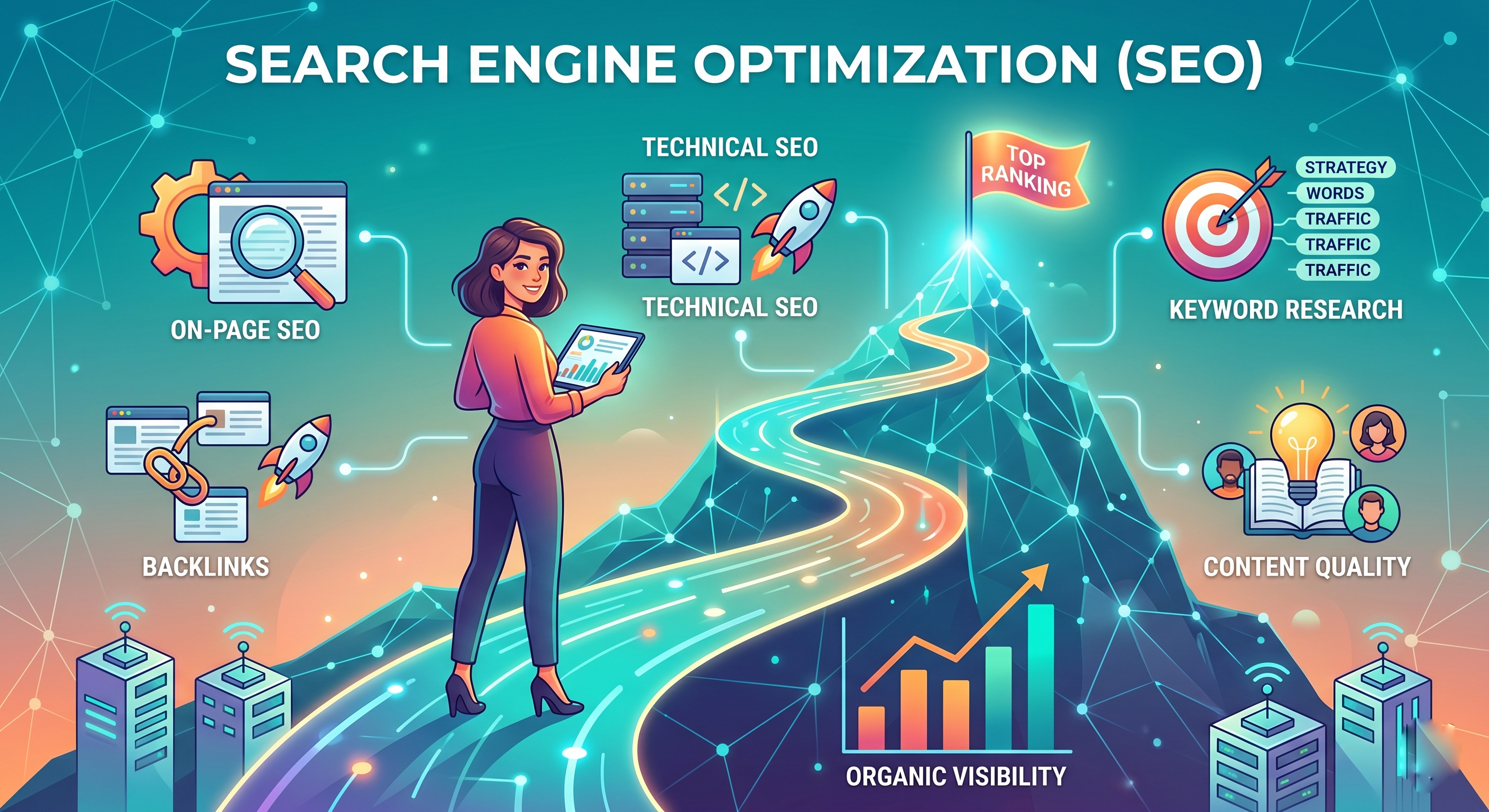
- SEO focuses on optimizing your website to appear higher in search engine results(SERP page), driving targeted organic traffic and boosting online presence.
2. SEM ( Search Engine Marketing )
- Through strategic paid advertising, businesses can reach potential customers directly in search results and achieve faster marketing results.
3. SMM ( Social Media Marketing )
- Uses social media platforms to promote your brand, connect with customers, and build strong relationships through engaging content and interactions.
4. Content Marketing
- Creates and shares valuable content to attract potential customers, build trust, and encourage them to take action.
5. Email Marketing
- Uses personalized email campaigns to engage customers, build lasting relationships, and drive more sales.
6. PPC ( Pay-Per-Click Advertising )
- Displays online ads to potential customers and charges only when someone clicks on the advertisement.
7. Affiliate Marketing
- Partners promote your products or services through referral links and earn a commission for every successful sale or lead they generate.
8. Influencer Marketing
- Collaborates with influencers to promote your brand, reach new audiences, and build trust through authentic recommendations.
9. Video Marketing
- Video marketing helps businesses connect with their audience by sharing engaging videos that inform, inspire, and promote products or services.
10. Mobile Marketing
- Mobile Marketing targets users through smartphones and tablets using mobile apps, SMS campaigns, push notifications, and mobile-friendly websites.
11. ORM ( Online Reputation Management )
- Manages and improves your brand’s online image by monitoring reviews, responding to feedback, and building customer trust
12. WhatsApp Marketing
- WhatsApp Marketing helps businesses to connect with customers instantly through personalized messages, promotional offers, customer support, and important updates.
13. Marketing Automation
- Uses software and technology to automate marketing tasks, improve efficiency, and deliver personalized customer experiences across multiple channels.
14. E-commerce Marketing
- E-commerce marketing uses digital channels such as SEO, social media, email marketing, and paid advertising to attract customers, increase online visibility, and drive more sales through online stores.
15. Local SEO
- Local SEO ensures your business is easily found by potential customers searching for relevant services in their city or local area.
Key Elements of Digital Marketing
- Search Engine Optimization (SEO):-
- SEO is a digital marketing strategy that helps your website appear higher in search engine results(SERP) when people search for products, services, or information related to your business. It includes optimizing content, using relevant keywords, improving user experience, and increasing website authority through quality links. A strong SEO strategy helps drive targeted visitors to your website, generate leads, and grow your online presence without relying solely on paid advertising.
For Example:- A business offering digital marketing services can use SEO to rank for keywords such as “digital marketing agency,” “SEO services,” or “online marketing solutions,” helping potential customers find their website when searching online.
- Search Engine Marketing (SEM)
- Search Engine Marketing (SEM) is a digital marketing strategy that uses paid advertisements on search engines like Google and Bing to increase website visibility and attract targeted traffic. Businesses bid on relevant keywords so their ads appear at the top of search engine results when potential customers search for related products or services. SEM helps companies generate immediate visibility, drive qualified leads, and increase conversions.
For Example:- A business offering digital marketing services can use SEO to rank for keywords such as “digital marketing agency,” “SEO services,” or “online marketing solutions,” helping potential customers find their website when searching online.
- Social Media Marketing (SMM)
- Social Media Marketing (SMM) is the practice of using social media platforms such as Facebook, Instagram, LinkedIn, X (Twitter), and YouTube to promote a brand, connect with customers, and increase online visibility. Businesses use engaging content, paid advertisements, stories, reels, and community interactions to build relationships with their audience, boost brand awareness, and drive website traffic or sales.
For Example:- Many company regularly uses Instagram and Facebook to share new product launches, seasonal drinks, customer stories, and promotional campaigns. By posting visually appealing content and interacting with followers, company’s keeps its audience engaged, strengthens brand loyalty, and encourages customers to visit its stores or place online orders.
- Content Marketing
- Content Marketing is a digital marketing strategy focused on creating and sharing valuable, informative, and engaging content to attract, educate, and retain potential customers. This content can include blog posts, articles, videos, infographics, case studies, guides, and other resources that help solve customer problems and answer their questions. By providing useful information, businesses can build trust, establish authority in their industry, and generate qualified leads over time.
For Example:- An online fitness coaching business that regularly publishes workout guides, nutrition tips, exercise videos, and healthy lifestyle articles on its website and social media channels. People searching for fitness advice discover this content through search engines and social platforms. As they find value in the content, they begin to trust the business and are more likely to sign up for coaching programs or purchase related services.
- Email Marketing
- Email Marketing strategy that helps businesses communicate directly with their audience through personalized emails. It is used to share product updates, promotional offers, newsletters, educational content, and important announcements. By delivering relevant content to the right people at the right time, email marketing helps businesses nurture leads, strengthen customer relationships, increase engagement, and drive sales.
For Example:-Imagine an online clothing store that sends emails to its subscribers about new arrivals, seasonal discounts, and exclusive offers. Customers who have previously shown interest in certain products receive personalized recommendations based on their preferences. These targeted emails encourage repeat purchases, improve customer loyalty, and keep the brand top of mind.
- PPC (Pay – per – click)
- Pay-Per-Click (PPC) Advertising is an online advertising model that allows businesses to place ads in front of potential customers on search engines, websites, and social media platforms. Instead of paying for the ad to be displayed, advertisers are charged only when a user clicks on the ad and visits their website or landing page.
- PPC is an effective way to gain immediate visibility, attract targeted visitors, promote products or services, and achieve marketing goals such as lead generation and sales.
For Example:- An online electronics store running ads for keywords such as “buy wireless headphones” or “best laptop under ₹50,000.” When users search for these terms, the store’s ads appear at the top of the search results. If a user clicks on the ad and visits the website, the business pays a small fee for that click. This helps the store attract potential customers who are actively looking to make a purchase.
- Affiliate Marketing
- Affiliate Marketing is a performance-based marketing model where individuals, content creators, bloggers, or business partners promote a company’s products or services through unique referral links.
- In return, affiliates earn a commission whenever someone makes a purchase, signs up, or completes a desired action through their referral link. This approach helps businesses expand their reach, generate more sales, and pay only for measurable results.
For Example:- A technology blogger writing a review about the best laptops for students. Within the article, they include referral links to recommended laptops. When readers click on those links and purchase a laptop, the blogger earns a commission from the sale. At the same time, the online store gains new customers and increased sales, creating a win-win situation for both parties.
- Influencer Marketing
- Influencer Marketing involves partnering with influencers, content creators, and industry experts who have an engaged audience on social media platforms. These influencers promote products or services through reviews, recommendations, tutorials, sponsored posts, videos, and other content formats. Because followers often trust the opinions of influencers they follow, influencer marketing can help businesses increase brand awareness, build credibility, reach new audiences, and drive sales.
For Example:- Imagine a lingerie brand launching a new collection of comfortable and stylish brs etc.. wear. The brand collaborates with fashion and lifestyle influencers who create styling videos, product reviews, and social media posts showcasing the collection. Their followers see the influencers wearing and recommending the products, which builds trust, increases brand visibility, and encourages potential customers to explore the collection or make a purchase.
- Video Marketing
- Video Marketing uses engaging video content to capture attention, educate audiences, and showcase products or services. Businesses create videos such as product demonstrations, tutorials, customer testimonials, brand stories, and promotional content to connect with potential customers.
- These videos can be shared on platforms like YouTube, Instagram Reels, Facebook, TikTok, and company websites to increase brand awareness, boost engagement, and encourage conversions.
For Example:- A skincare brand introducing a new face serum. The company creates short videos showing how the product is used, highlighting its benefits, and sharing customer experiences. These videos are published on social media and the brand’s website, helping potential customers understand the product better and feel more confident about making a purchase.
- Mobile Marketing
- Mobile Marketing is the practice of reaching and engaging customers through smartphones, tablets, and other mobile devices. With the growing use of mobile technology, businesses can connect with their audience anytime and anywhere through personalized messages, mobile applications, and mobile-optimized experiences. This approach helps companies improve customer engagement, increase brand visibility, generate leads, and drive sales. here are some of the key element,
- SMS Marketing.
- Push Notifications.
- Mobile Apps.
- Mobile-Friendly Websites.
- In-App Advertising.
- Location-Based Marketing.
For Example:- A skincare brand introducing a new face serum. The company creates short videos showing how the product is used, highlighting its benefits, and sharing customer experiences. These videos are published on social media and the brand’s website, helping potential customers understand the product better and feel more confident about making a purchase.
- Online Reputation Management (ORM)
- it was the process of monitoring, maintaining, and improving how a business or brand is perceived online. It involves managing customer reviews, ratings, social media mentions, and online feedback to build trust and maintain a positive brand image. By actively addressing customer concerns and encouraging positive experiences, businesses can strengthen their credibility and attract more potential customers.
For Example:- A local restaurant receives customer reviews on Google and social media platforms. The restaurant regularly responds to feedback, thanks customers for positive reviews, and addresses concerns raised in negative reviews. By actively managing its online reputation, the restaurant builds trust with potential customers and encourages more people to visit and try its services.
- WhatsApp Marketing
- WhatsApp Marketing is a communication-focused approach that allows businesses to connect directly with customers through WhatsApp.
- It is used to send promotional messages, product updates, order confirmations, appointment reminders, customer support responses, and personalized offers.
- With its instant messaging capabilities and high open rates, WhatsApp helps businesses build stronger relationships, improve customer engagement, and provide a more personalized customer experience.
For Example:- Dental clinic using WhatsApp to communicate with patients. The clinic sends appointment reminders, follow-up care instructions, and notifications about special dental checkup packages. Patients can easily confirm appointments, ask questions, and receive quick responses, helping the clinic improve customer service, reduce missed appointments, and strengthen patient relationships.
- Marketing Automation
- Marketing Automation uses software and technology to streamline repetitive marketing activities such as email campaigns, lead nurturing, customer segmentation, social media scheduling, and follow-up communications. By automating routine tasks, businesses can save time, improve efficiency, deliver personalized customer experiences, and focus on strategic growth initiatives. It also helps ensure that the right message reaches the right audience at the right time.
For Example:- Imagine an online learning platform that offers free eBooks and study materials to attract potential students. A visitor arrives on the website after seeing a social media post and downloads a free guide about career development. As soon as the guide is downloaded, the marketing automation system automatically sends a welcome email thanking the visitor and providing access to the resource.
A few days later, the visitor receives another email containing useful learning tips and related articles. Based on the visitor’s interest in career development, the system automatically recommends relevant online courses. If the visitor clicks on a course page but does not enroll, an automated follow-up email is sent with additional course details, student success stories, and a limited-time discount offer.
Throughout this process, the platform tracks the visitor’s interactions, such as email opens, link clicks, and website visits. Using this information, the system delivers more personalized content and recommendations. This automated workflow keeps potential students engaged, builds trust over time, and increases the likelihood of converting interested visitors into paying customers without requiring manual follow-up from the marketing team.
- E-commerce Marketing
- E-commerce Marketing focuses on promoting products and services sold through online stores. It involves attracting potential customers, increasing website traffic, improving the shopping experience, and encouraging purchases through various online channels. Businesses use techniques such as search engine optimization (SEO), paid advertising, email campaigns, social media promotion, content creation, and conversion rate optimization to grow their online sales and customer base.
For Example:- Beauty products store or company launching a new skincare serum and moisturizer collection. The business optimizes product pages for search engines, shares skincare tips and product demonstrations on social media, runs paid advertisements targeting beauty enthusiasts, and sends email campaigns featuring exclusive discounts and product recommendations. Customers who add products to their cart but do not complete their purchase receive automated reminder emails. By combining these marketing efforts, the beauty brand attracts more visitors, increases conversions, and generates higher online sales.
- Local SEO
- Local SEO focuses on improving a business’s visibility in location-based search results, helping nearby customers find products or services when searching online. It involves optimizing business information, local listings, website content, and customer reviews to increase visibility on search engines and map services. Local SEO is especially important for businesses that serve specific geographic areas, such as restaurants, clinics, retail stores, salons, and service providers.
For Example:- Pizza brand uses Local SEO to help customers find nearby outlets when searching for terms like “pizza delivery near me” or “pizza restaurant in my area.” Each store location has optimized business listings with accurate addresses, phone numbers, operating hours, customer reviews, and map directions. As a result, customers can quickly locate the nearest branch, place orders, and access delivery services, helping brand attract more local customers and increase sales.
By leveraging the right digital marketing techniques, businesses can reach more customers, increase engagement, and stay ahead in an increasingly competitive online marketplace.